Commercial Roofers in Federal Heights
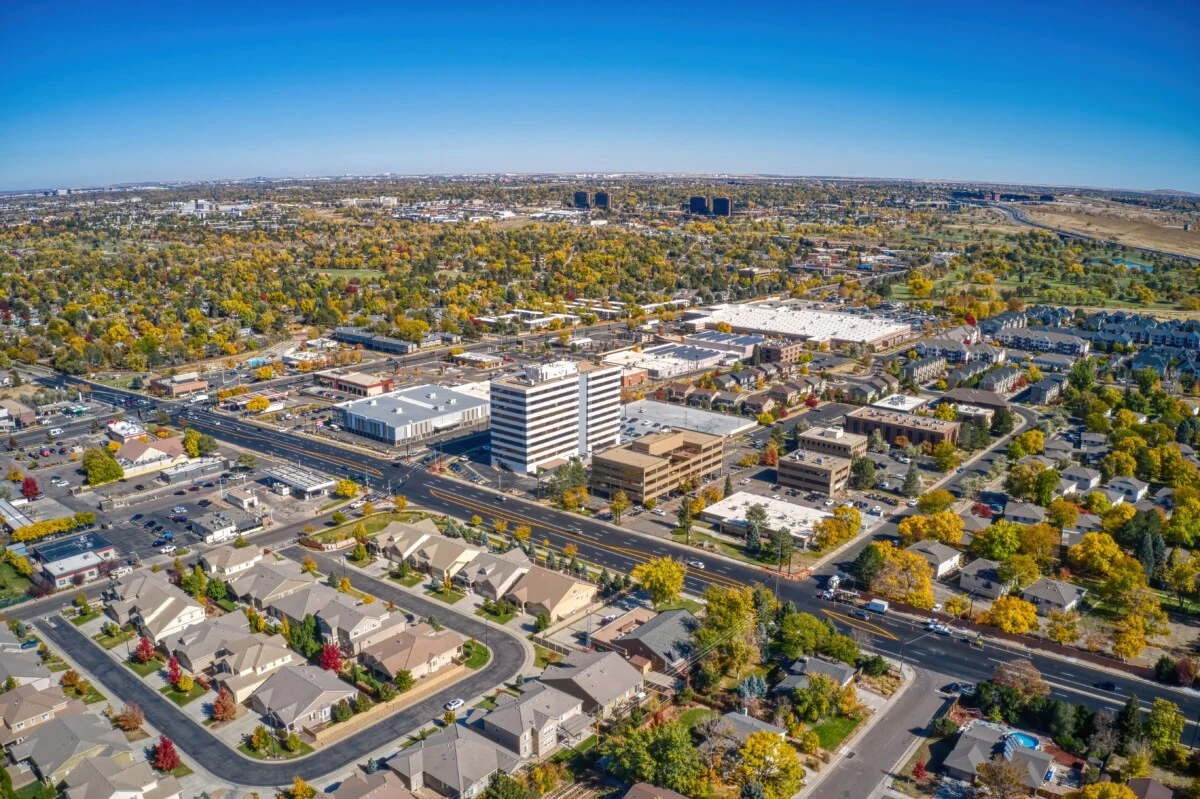
Commercial roofing in Federal Heights should begin with a documented assessment of membrane condition, seams, flashings, drainage, penetrations, and moisture before repair, coating, or replacement is selected. Federal Heights is a small city centered on the Federal Boulevard retail corridor, with Water World drawing seasonal traffic on the west side and a run of strip retail and service buildings lining Federal itself. Most of the roof work we do here is on smaller commercial footprints, which changes how we price and schedule compared to a big-box anchor a few miles south. Wedged between I-25 and Federal Boulevard, the city is small enough that we know most of the commercial roof inventory here by sight, which speeds up the estimating process for owners who call us directly.
Small-Footprint Retail Means Different Math
A typical Federal Heights strip retail building runs a fraction of the square footage of a Northglenn big-box anchor, which means fixed mobilization costs make up a bigger share of the total project price. We often see multiple tenants under one roof with one landlord responsible for the membrane, which means coordinating access and notice across several businesses before a crew shows up.
Most of these buildings run TPO or EPDM over a metal deck, installed in the 1990s or 2000s when the corridor built out. A lot of that original membrane is now at or past typical service life, which is why inspection requests along Federal have picked up over the past few years.
Seasonal Facilities Bring Their Own Scheduling Constraints
Water World and the seasonal amusement operations nearby run on a tight calendar, busy summer months, closed or low-traffic in the off-season. Any roof work on structures tied to that seasonal schedule gets planned around the operating window, which usually means we're pricing and mobilizing in the shoulder seasons rather than mid-summer.
The support buildings and larger structures near a seasonal attraction like this also see different wear patterns than year-round retail, heavier foot traffic and rooftop equipment cycling during peak months, then long stretches of minimal use. We factor that use pattern into how often we recommend inspections, generally suggesting a pre-season check every spring before the summer crowds and cooling loads arrive, plus a shorter fall check once things slow back down.
Federal Boulevard's Wind and Hail Exposure
This stretch of the corridor sits open enough that wind-driven hail from storms tracking across Adams County hits these low-slope roofs with little to slow it down. We see the usual pattern on older EPDM: granule loss isn't the issue since it's a rubber membrane, but seam tape failure and flashing pull-away show up after wind events more than on a newer TPO installation.
- Seam tape lifting on older EPDM roofs after high-wind events
- Leaks at rooftop unit curbs on buildings with heavier seasonal HVAC cycling
- Ponding at parapet corners on smaller strip retail footprints
- Flashing separation at the roof-to-wall transition on multi-tenant buildings
- Membrane brittleness on original 1990s-era installations past typical service life
- Debris buildup in drains from nearby seasonal foot traffic and landscaping
Coordinating Access Across Multiple Tenants
When a strip building has four or five tenants under one roof, notice and access planning matters as much as the roofing work itself. We build a schedule that tells the landlord exactly which days crews will be over which units, so tenants aren't surprised by noise or staging in the parking lot during business hours.
On buildings where the roof has reached its recover ceiling, we price tear-off in phases where possible, working across the roof in sections tied to which storefronts can tolerate a day or two of overhead work without disrupting operations.
Older Membrane, Lower Budgets
Federal Heights landlords running smaller strip properties often work with tighter capital budgets than a REIT-owned big-box anchor a few miles away, which changes how we approach the recover-versus-replace conversation. We spend more time here laying out a phased plan, patching and targeted section repairs to buy a few more years where the membrane still has life left, paired with a clear timeline for when full replacement becomes the only responsible option.
That phased approach only works if the landlord has honest numbers on remaining service life, so we document membrane condition at every inspection rather than giving a verbal read. A written record makes the eventual replacement conversation easier, since the deterioration shows a clear trend instead of a sudden surprise.
Federal Heights Roofing Questions We Get Often
Does a multi-tenant building need every tenant's sign-off before roof work starts?
Not for the contract itself, but we coordinate notice with the landlord so every tenant knows the schedule in advance and isn't caught off guard by crews overhead.
Why do you recommend scheduling around Water World's season?
Structures tied to seasonal operations are easiest to work on during the off-season, when access and parking aren't constrained by summer crowds.
Is EPDM still a good option for a Federal Boulevard strip building?
It can be, especially for smaller footprints on a budget, but seam tape maintenance matters more on EPDM than on newer heat-welded TPO systems.
How do you handle mobilization costs on a small retail building?
Fixed costs are a bigger share of the total on a small roof, so we're upfront that the cost per square foot runs higher than a big-box job of the same membrane type.
What's the most common cause of leaks on these older strip roofs?
Flashing separation at the roof-to-wall transition and rooftop unit curb failures, both more common on buildings past their original membrane's service life.