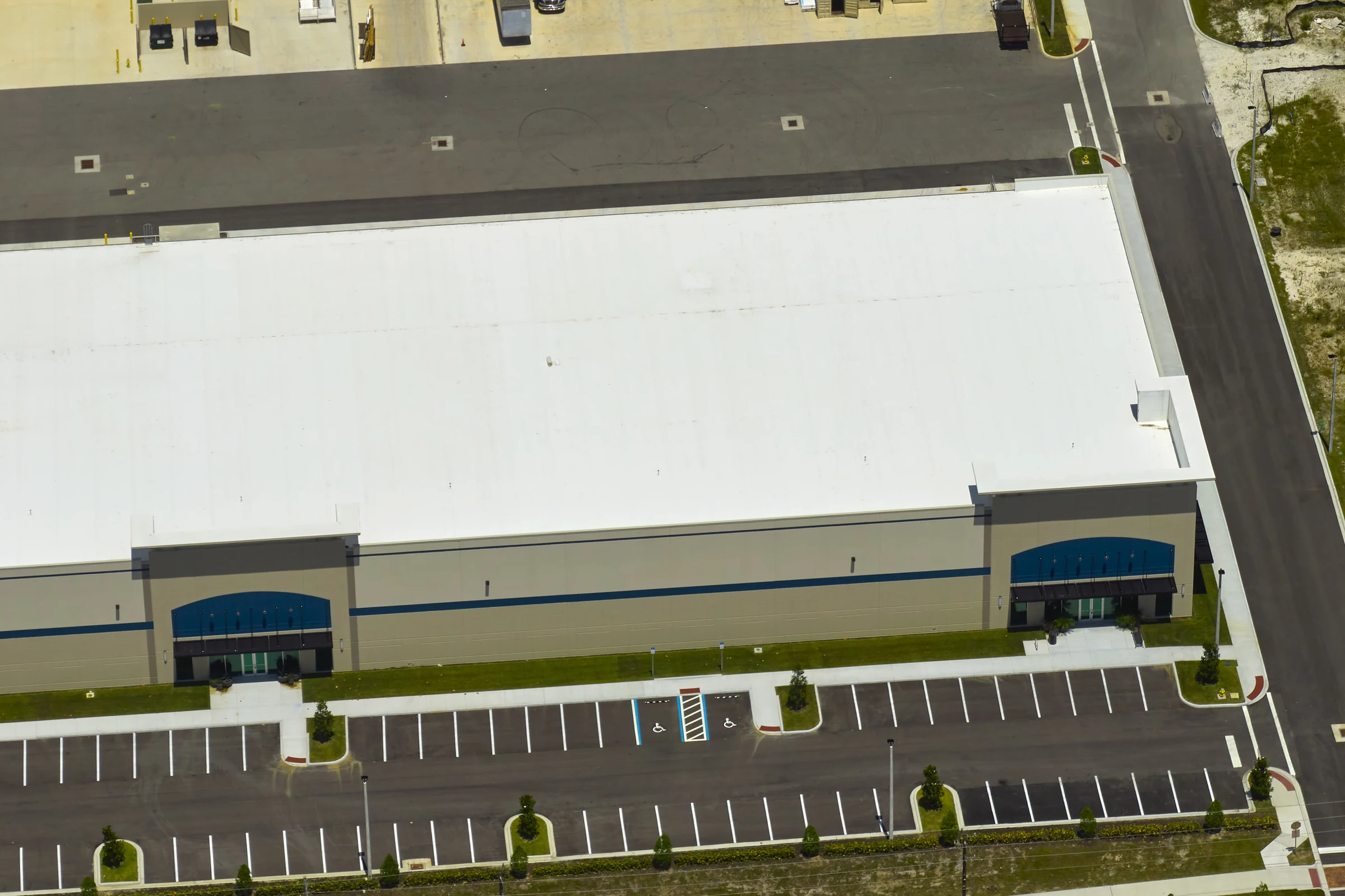
Flat Roofs Over Commerce City and Henderson's Rail-Served Warehouse Stock
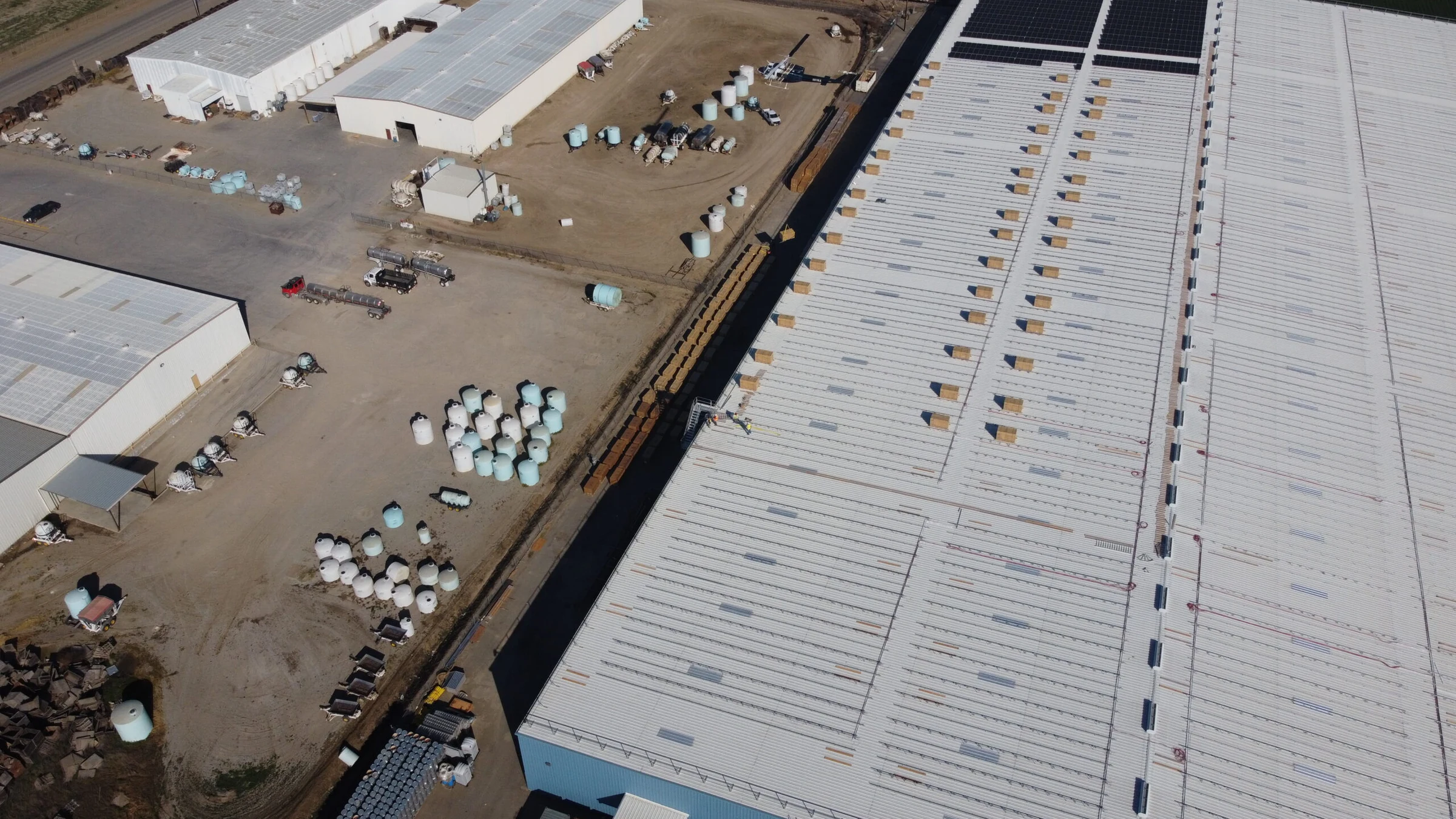
Warehouse roofs in this market run from the Suncor-adjacent industrial blocks of Commerce City to the rail-served distribution buildings around Henderson, and almost all of them are the same basic shape: a big flat single-ply membrane over a steel deck, sized in acres rather than square feet.
Pricing a Warehouse Roof Starts With the Deck, Not the Membrane
A 150,000-square-foot warehouse roof lives or dies on deck condition. Steel deck corrosion around old roof drains or HVAC curbs changes the entire scope, and we check it before quoting membrane, because fastener pull-out on a compromised deck is a wind-uplift failure waiting to happen.
We run a fastener pull test on larger warehouse reroofs rather than assuming the original engineering still holds, especially on buildings that have gone through multiple tenant changes and unrecorded rooftop additions.
Older warehouse stock in this corridor sometimes still carries a lightweight steel deck spec that was adequate for the roofing systems available when the building went up but doesn't have the margin for a heavier recover assembly today. On those buildings we run the numbers on a full tear-off against a lighter recover before assuming either option, since the deck's original design load sets a hard ceiling on what we can add.
TPO Dominates for a Reason Here
TPO single-ply is the default for warehouse and distribution roofing in this market, white membrane reflects Front Range UV load, seams weld clean over huge field runs, and material cost per square foot stays competitive against EPDM and PVC at warehouse scale.
EPDM still shows up on older buildings and in some ownership groups that prefer its track record, and we'll spec it when the numbers or the owner's standing program call for it. 60-mil TPO is our default recommendation for standard warehouse traffic; 80-mil earns its upcharge on roofs with heavier rooftop equipment or expected foot traffic.
Rail-Served Buildings Carry Their Own Wear Pattern
Warehouses along the rail spurs near Henderson and Commerce City see more rooftop equipment turnover than typical distribution boxes, conveyor penetrations, dust collection stacks, compressor pads, because these buildings often run light manufacturing or transload operations alongside storage.
Every added penetration is a flashing detail that didn't exist in the original roof design. We catalog those additions during inspection and price remediation of any that were installed without proper curb flashing.
Aerotropolis Growth Means New Construction Specs, Too
The warehouse buildout pushing toward DEN brings new-construction roofing work alongside the reroof and repair side of the business. New-build specs get driven by the general contractor's schedule and the developer's target hold period, which changes the membrane-thickness math compared to an owner-occupied building planning to hold for decades.
- Deck gauge and corrosion at drains, curbs, and parapet tie-ins
- Existing fastener pattern and pull-out resistance for wind uplift compliance
- Rooftop equipment added after original construction and its flashing condition
- Skylight and smoke-vent count, both common leak sources on warehouse roofs
- Drainage capacity against the roof's actual square footage, not the original design load
- Drain and scupper condition on older buildings with undersized original systems
Maintenance Programs Beat Reactive Repair on Buildings This Large
On a roof measured in acres, a small unaddressed issue compounds fast. We push preventive maintenance programs on warehouse clients over one-off repair calls, because the cost of a scheduled walk twice a year is a rounding error against an emergency tear-off after a leak reaches inventory below.
Suncor-Adjacent Buildings Carry an Added Air Quality Consideration
Warehouses closest to the Suncor refinery complex in Commerce City deal with airborne particulate and occasional emissions events that settle on rooftop membrane and can accelerate wear on certain coating systems over time. We factor that exposure into membrane and coating selection on buildings in that immediate footprint rather than specifying the same system we'd use farther out along the Henderson corridor.
Crews working those roofs also coordinate around any refinery-driven access restrictions during elevated air quality events, since some tenants in that zone operate under their own emergency response protocols that can affect scheduling on short notice.
We've also seen ownership groups in this footprint ask for coating systems with documented chemical resistance beyond the standard product line specifically because of that exposure history, and we'll spec accordingly when a building's location and operating history justify the upgrade over a standard membrane.
Warehouse Roofing, Straight From the Estimate Sheet
How long does a full reroof take on a 100,000-square-foot warehouse?
Timeline depends on crew size, weather windows, and whether the building stays operational during the work. We build the schedule around your operations rather than quoting a generic number that ignores your loading dock activity.
Can you reroof a warehouse without shutting down operations below?
In most cases yes, working in sections and coordinating with your operations team on staging and material laydown so forklift and dock traffic isn't blocked.
What causes most warehouse roof leaks in this market?
Failed penetration flashing around equipment added after original construction, plus ponding water at low spots where drainage wasn't sized for the roof's actual footprint.
Is TPO or EPDM the better choice for a warehouse roof here?
TPO edges out for most warehouse applications on cost and UV performance, but EPDM remains a sound choice on buildings already running that system or where an ownership group has a standing material preference.
Do you handle roofing on buildings still under original builder warranty?
We review the existing warranty terms before doing any work, since some builder warranties require specific contractors or void if outside crews touch the roof without notification.