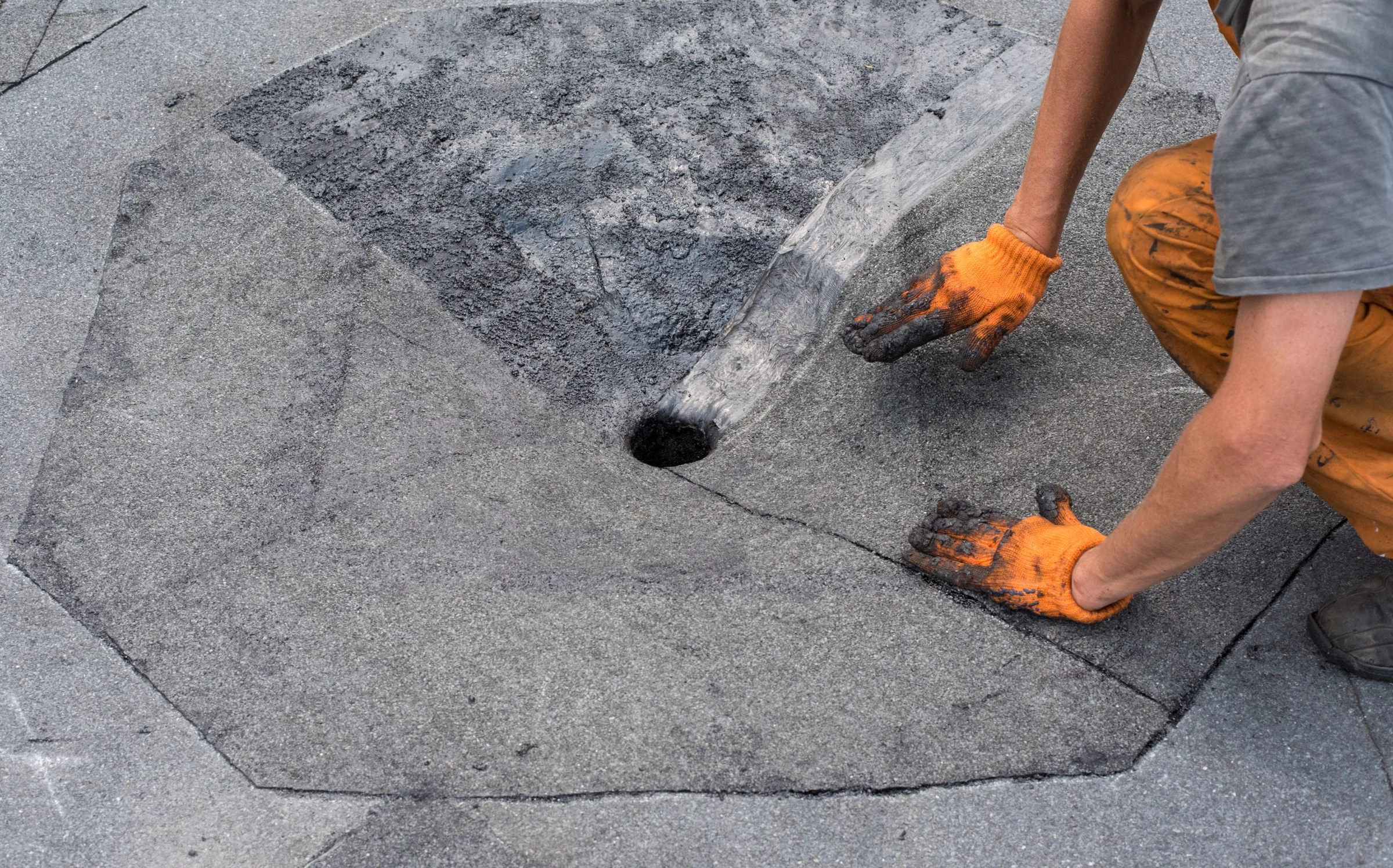
Drain and Scupper Capacity for Aurora's Convective Storm Season
Drainage is the roof detail that gets ignored until the day it can't keep up. Aurora's summer storm pattern delivers heavy rain in short, intense bursts, and a drain or scupper system that's undersized, clogged, or poorly sloped toward can turn a normal thunderstorm into standing water across the field.
Why Drainage Gets Overlooked Until It Floods a Roof
A roof drain that's mostly clear looks fine on a quick visual check, which is exactly why drainage problems tend to go unnoticed until a storm exposes them. We test actual flow rate during inspections rather than confirming a drain is simply present and uncovered.
Debris accumulation happens gradually, from cottonwood seed drift in early summer to general windblown debris the rest of the year, and a drain that was flowing fine in spring can be significantly restricted by the time the heaviest summer storms arrive if it hasn't been checked in between.
Summer Convective Storms and Sudden Volume
The storms that build over the plains east of Aurora and move through the metro in late afternoon can drop a large share of a month's rainfall in under an hour. That kind of burst rate is a different engineering problem than steady, moderate rain, since the drainage system has to handle peak volume, not average volume.
Roofs designed decades ago, before current drainage sizing standards, are more likely to underperform during these bursts, particularly on larger warehouse fields where the total roof area feeding each drain is substantial. We calculate actual drainage area per outlet against current standards when evaluating an older roof's capacity.
Interior drains and perimeter scuppers fail in different ways during a burst event. An interior drain relies entirely on the strainer staying clear and the sump around it holding its slope, while a scupper depends on the parapet opening itself staying free of debris and the through-wall flashing staying sealed against wind-driven rain during the same storm.
Spring Snowmelt and Freeze-Thaw Blockages
Winter brings a different drainage challenge. Snow accumulation followed by a chinook warm spell can produce rapid melt that refreezes overnight at drain outlets, forming ice dams that block flow right as the next melt cycle needs somewhere for water to go.
We check for ice damming risk at drains and scuppers during winter maintenance visits, since a frozen outlet during a melt cycle can produce standing water loads the roof deck wasn't necessarily designed to carry, even without any new precipitation falling.
- Flow testing at every drain and scupper rather than a visual check alone
- Debris removal from strainers, sumps, and scupper channels
- Slope verification toward each drainage point across the field
- Drainage area calculation compared against current sizing standards
- Ice damming risk check during winter maintenance visits
- Retrofit recommendation where existing capacity falls short
Ponding Water and Structural Load Over Time
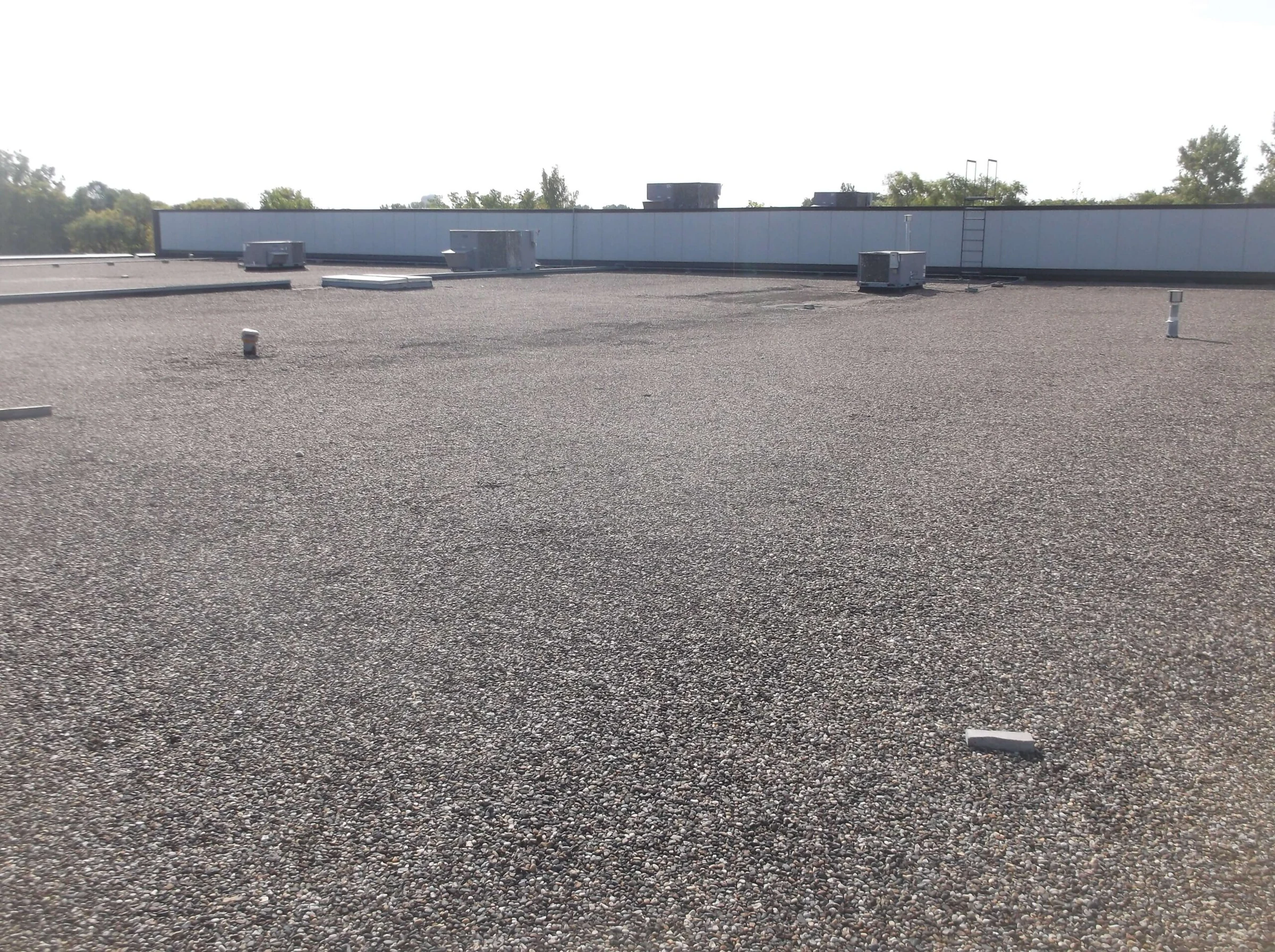
Standing water that doesn't clear within about 48 hours after a storm accelerates membrane aging beyond what UV and normal wear would cause alone, and it adds a structural load the roof deck wasn't necessarily designed to carry as a routine condition. A drain problem left unaddressed doesn't stay a drainage problem; it becomes a membrane and structural problem.
We map ponding areas against recent rainfall during inspections, distinguishing between a spot that clears normally within a day or two and one that's holding water well past that window, since the second case points toward a slope or drainage capacity issue rather than just a routine puddle.
Retrofit Options on Older Roofs With Undersized Drainage
Adding supplemental drains or scuppers is often more practical than trying to correct slope across an entire existing field, particularly on a roof that's otherwise in good condition. We evaluate whether additional drainage points can be added within the existing membrane system without triggering a full reroof.
On roofs already scheduled for recover or replacement, we treat drainage capacity as part of that broader scope, since it's far more efficient to correct undersized drainage during a reroof than to retrofit it separately afterward.
Drainage Questions From Property Managers
How often should roof drains be cleaned?
We recommend checking drains at each seasonal maintenance visit, generally twice a year, with additional attention after any storm heavy enough to move significant debris onto the roof.
What causes standing water that won't drain within a day or two?
Usually a combination of insufficient slope toward the nearest drain, a partially blocked outlet, or a drainage system that was undersized for the roof's actual area to begin with. We map the ponding pattern to identify which factor is the main cause.
Can ice buildup at drains cause roof damage in winter?
Yes. An ice-blocked drain during a melt cycle can force standing water to sit on the roof under real weight, and we check for this specifically during winter visits on buildings with a history of drainage issues.
Do all roofs need scuppers as well as drains?
It depends on the roof's design and parapet configuration. Some roofs rely on interior drains alone, others use scuppers as overflow protection or as the primary drainage method, and we evaluate what the existing system was designed to do before recommending changes.
Is adding a drain a major project?
Not usually, if it can be done within the existing membrane system. Adding a drain or scupper is often a contained repair rather than a full roof project, though the specifics depend on the roof's construction and current condition.