Reading a Tar-and-Gravel Roof Before Deciding Its Fate
Built-up roofing is still up on a meaningful share of Aurora's older municipal buildings, aging retail strips, and industrial stock near Commerce City's refinery-adjacent ground. It's not a system we install new very often anymore, but deciding whether to patch, recoat, or replace one of these roofs is a call we make regularly, and it's rarely as simple as the roof's age alone.
What's Actually Holding These Roofs Together
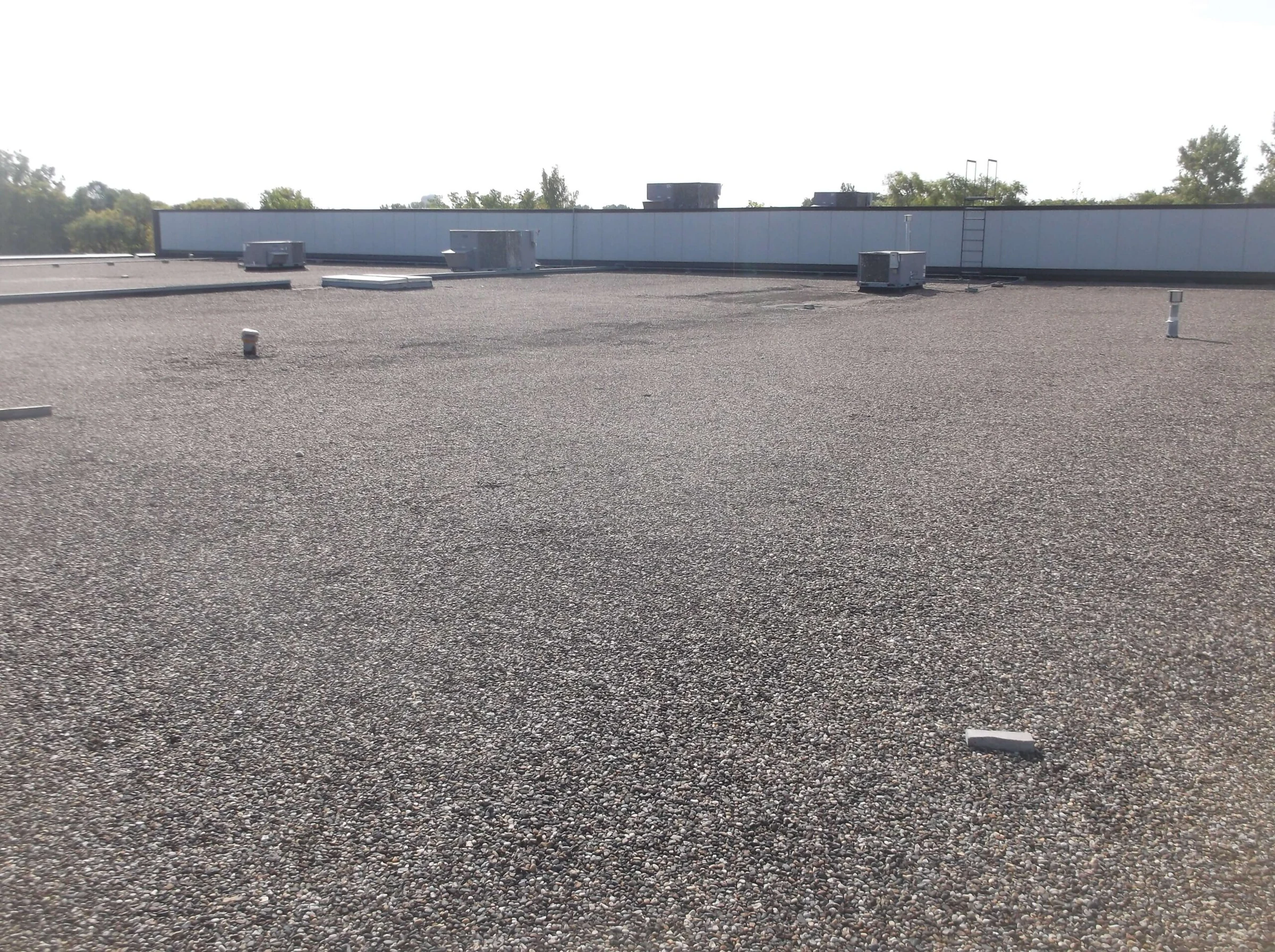
A built-up roof is layers of asphalt-saturated felt bonded together with hot asphalt, finished with a gravel or mineral-surface cap. The gravel isn't decorative -- it's the UV shield and the ballast that keeps wind from getting under the felt layers, and once it thins out in patches, the asphalt underneath starts breaking down faster than the rest of the field.
Municipal buildings and older strip retail in Aurora that never converted to single-ply tend to have BUR roofs anywhere from twenty to forty-plus years old. At that age, the question isn't whether the roof has problems -- it's whether those problems are isolated enough to repair economically or widespread enough that replacement is the honest number.
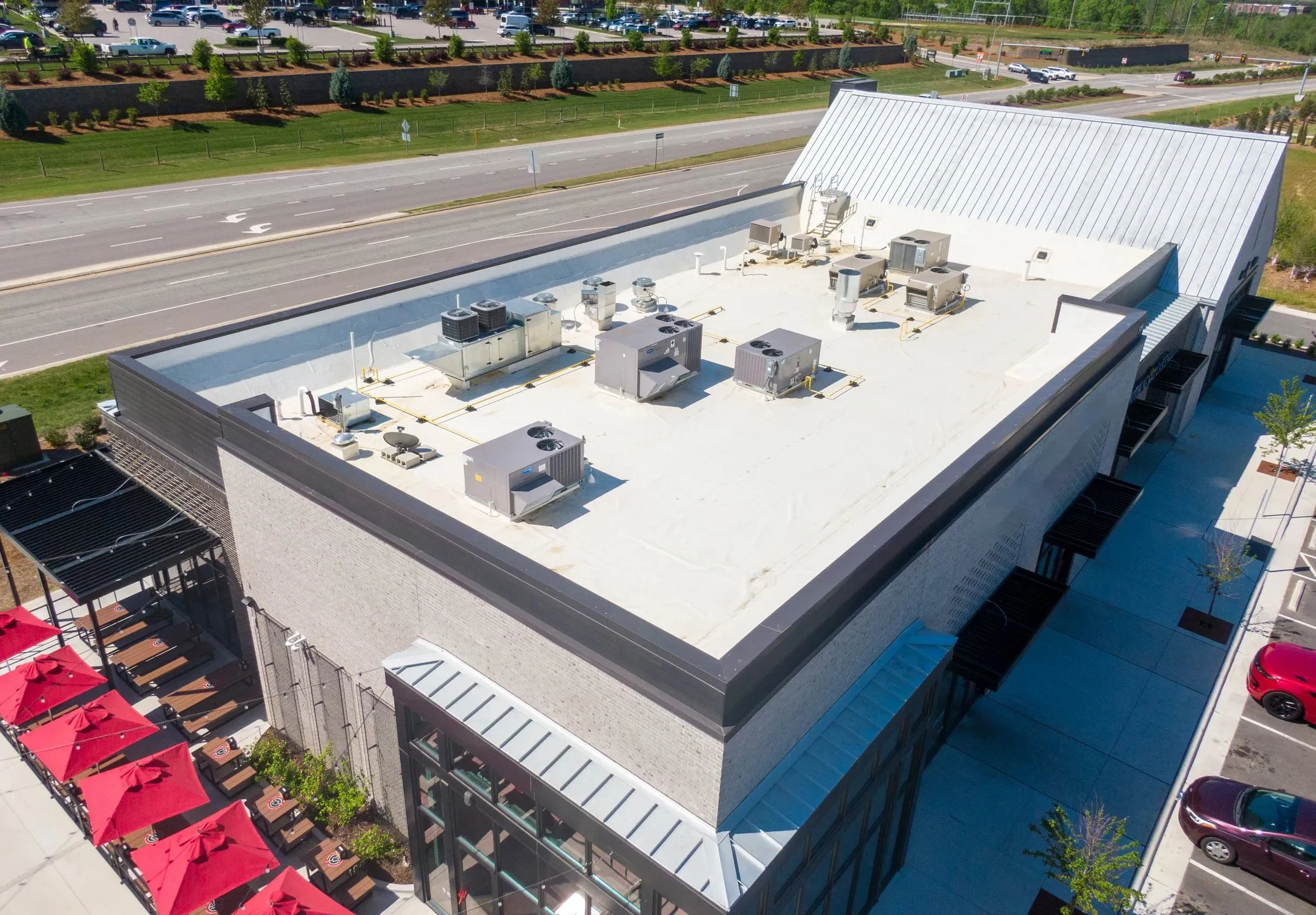
Industrial buildings on the heavier ground near Commerce City sometimes carry an added wrinkle: rooftop equipment and process venting installed well after the original roof went on, each with its own flashing detail cut into a gravel field never designed for that many penetrations. Every added curb is another spot where the felt plies can be compromised.
The Walk That Decides Repair vs Replace
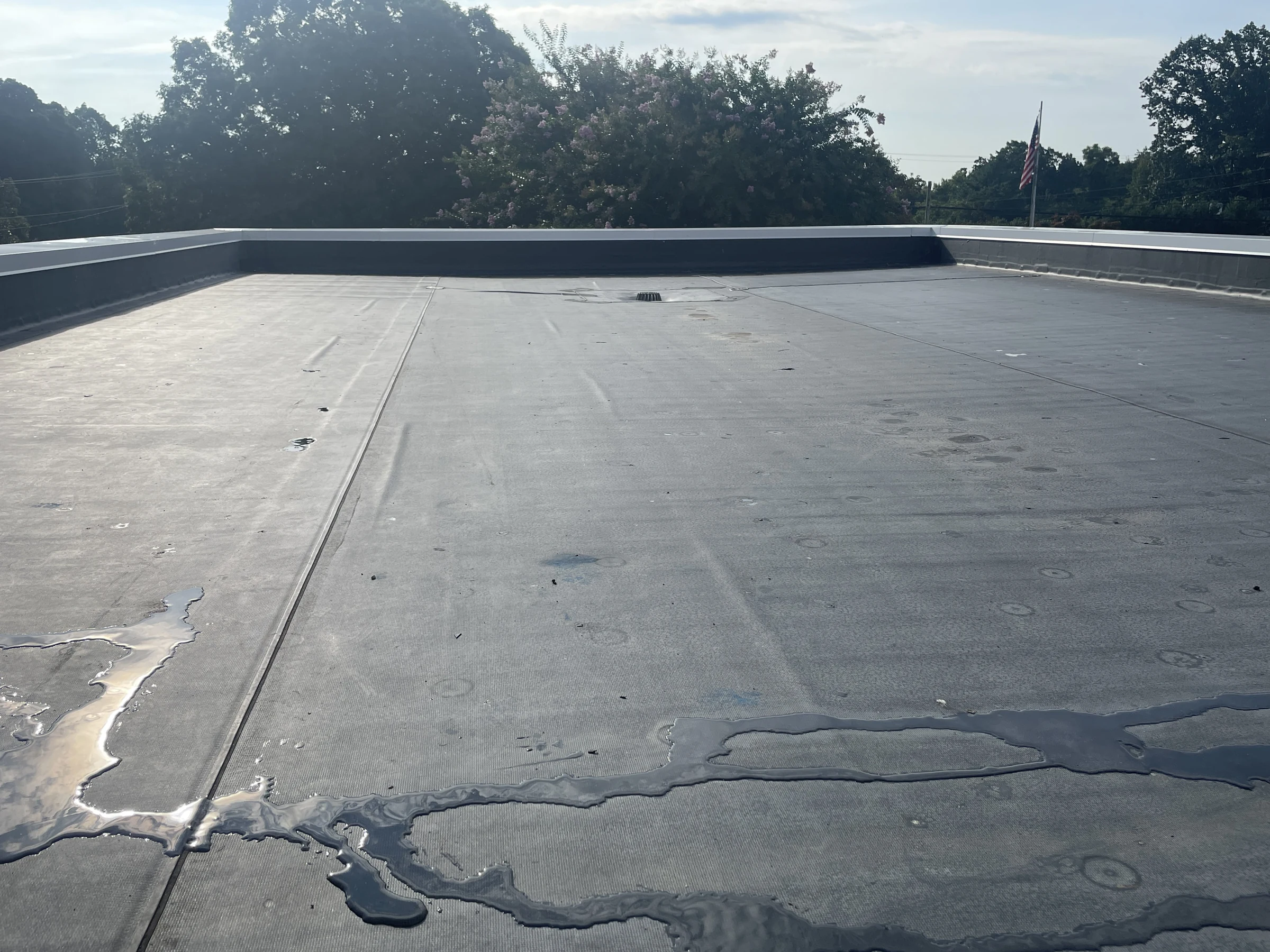
We check gravel coverage across the field first, since bare or thin spots tell us where UV exposure has been doing the most damage. Then we probe felt layers at seams, penetrations, and any area with visible blistering, since a blister usually means moisture got trapped between plies at some point.
- Gravel or mineral cap coverage across the field
- Felt ply condition at seams and flashings
- Blistering and alligatoring on the asphalt surface
- Moisture readings at the deck and insulation layer
- Drain and scupper function
- Parapet and edge metal condition
If moisture is isolated to a few areas and the rest of the field reads dry, a targeted repair or a recoat can add years to the roof for a fraction of replacement cost. Widespread wet insulation changes that math immediately, because no coating fixes what's already trapped under the membrane.
We also check parapet and edge metal condition on this walk, since a lot of BUR failures on older buildings start at a loose or corroded edge detail rather than in the open field. A parapet cap that's pulled away from the wall lets water behind the felt plies from the side, which shows up later as a leak that seems unrelated to its actual source.
Coating an Aging BUR Instead of Replacing It
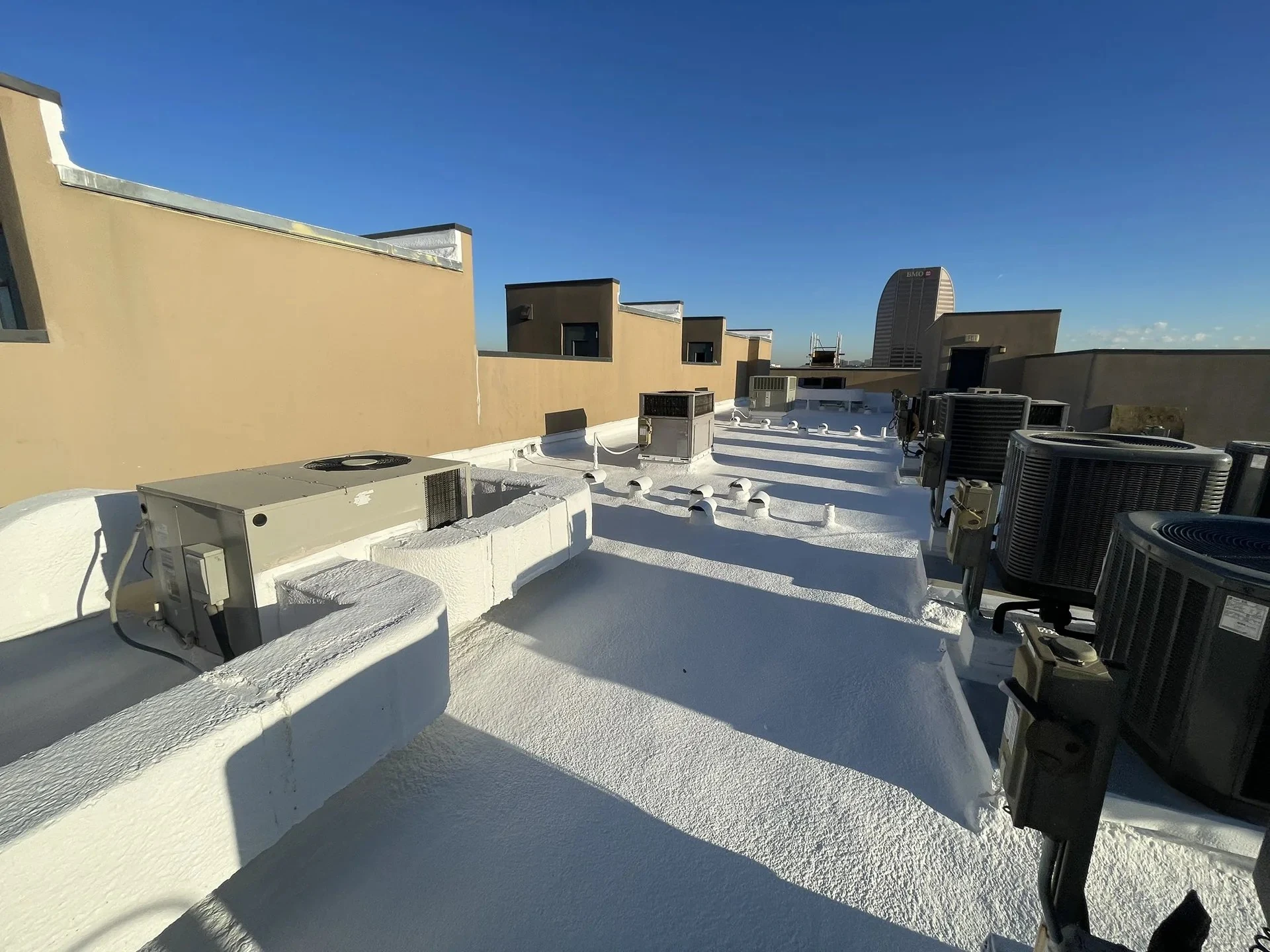
A silicone or acrylic coating applied over a sound, dry built-up roof restores UV protection and buys additional service years without the cost of a full tear-off. This only works if the underlying felt and insulation are still structurally intact -- coating a roof that's already failing at the deck just delays the inevitable repair while adding cost. See our silicone coatings page for how we evaluate that option.
We're direct with owners about which category their roof falls into. A BUR roof with intact felt and localized gravel loss is a good coating candidate; one with widespread blistering and wet insulation readings needs a real budget conversation about replacement.
What Replaces a Built-Up Roof Today
When a BUR roof reaches the end of its economical repair life, we rarely rebuild it the same way. TPO or a modified bitumen cap system over new insulation typically replaces it, chosen based on the building's occupancy, budget, and how much rooftop traffic the new roof needs to handle going forward.
Tapered insulation often gets added at the same time, correcting drainage problems that built up over decades of a flat deck settling and gravel shifting around low spots. That's usually the single biggest improvement we make on a BUR replacement beyond just swapping the membrane.
On municipal buildings, procurement timelines can stretch the schedule out further than the physical work itself takes. We build that lead time into the proposal upfront so an owner isn't caught off guard by how long the paperwork side of a public project runs compared to a private commercial job.
Questions About Aging BUR Roofs
How do you know if a built-up roof has wet insulation?
We use a moisture meter or infrared scan across the field rather than guessing from visible condition alone. Wet spots don't always show on the surface.
Can you patch a small leak on an old BUR roof without a full recoat?
Yes, for isolated damage. We wouldn't recommend it as a long-term strategy on a roof with widespread gravel loss, but a targeted patch buys time on an otherwise sound roof.
Is gravel ballast still used on new built-up roofs?
Rarely for new installs in this market. Most new low-slope construction goes single-ply, but we still service and repair the gravel-cap roofs already in place.
Does hail damage a built-up roof differently than a membrane roof?
Gravel ballast actually absorbs some hail impact that a bare membrane would take directly, but enough hail can still displace gravel and expose the asphalt cap underneath in spots.
How long can a coating extend a BUR roof's life?
It depends on the condition of the felt and insulation underneath, which is why we check those before recommending a coating rather than treating it as a default option for any old roof.