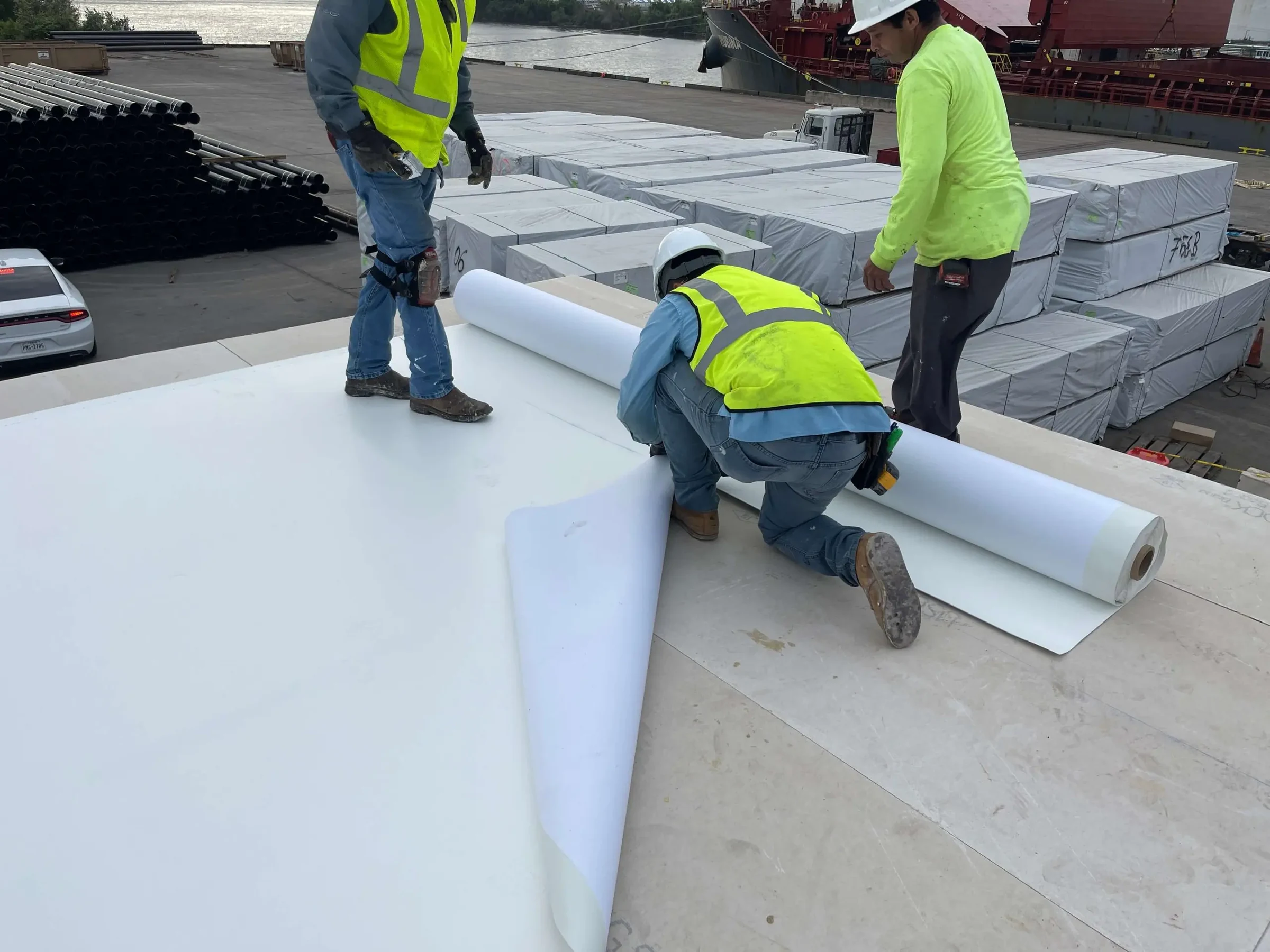
80-Mil TPO for High-Exposure Roofs Around DIA
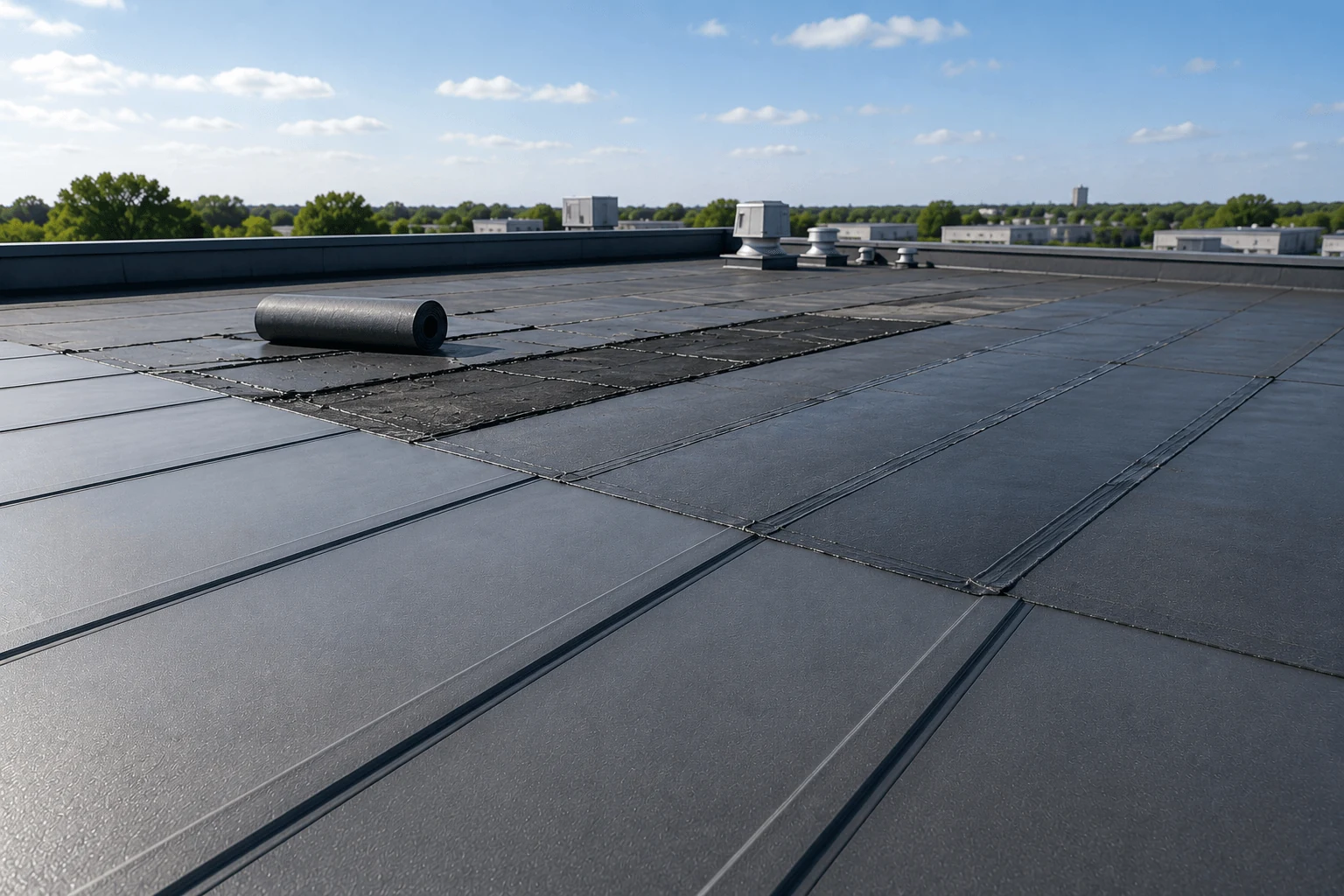
Eighty-mil TPO is the gauge we reach for when the exposure profile of the building outweighs the savings of a thinner membrane. The warehouse and distribution stock building out toward Denver International Airport is where this spec shows up most on our estimates.
Why the Aerotropolis Corridor Drives This Spec
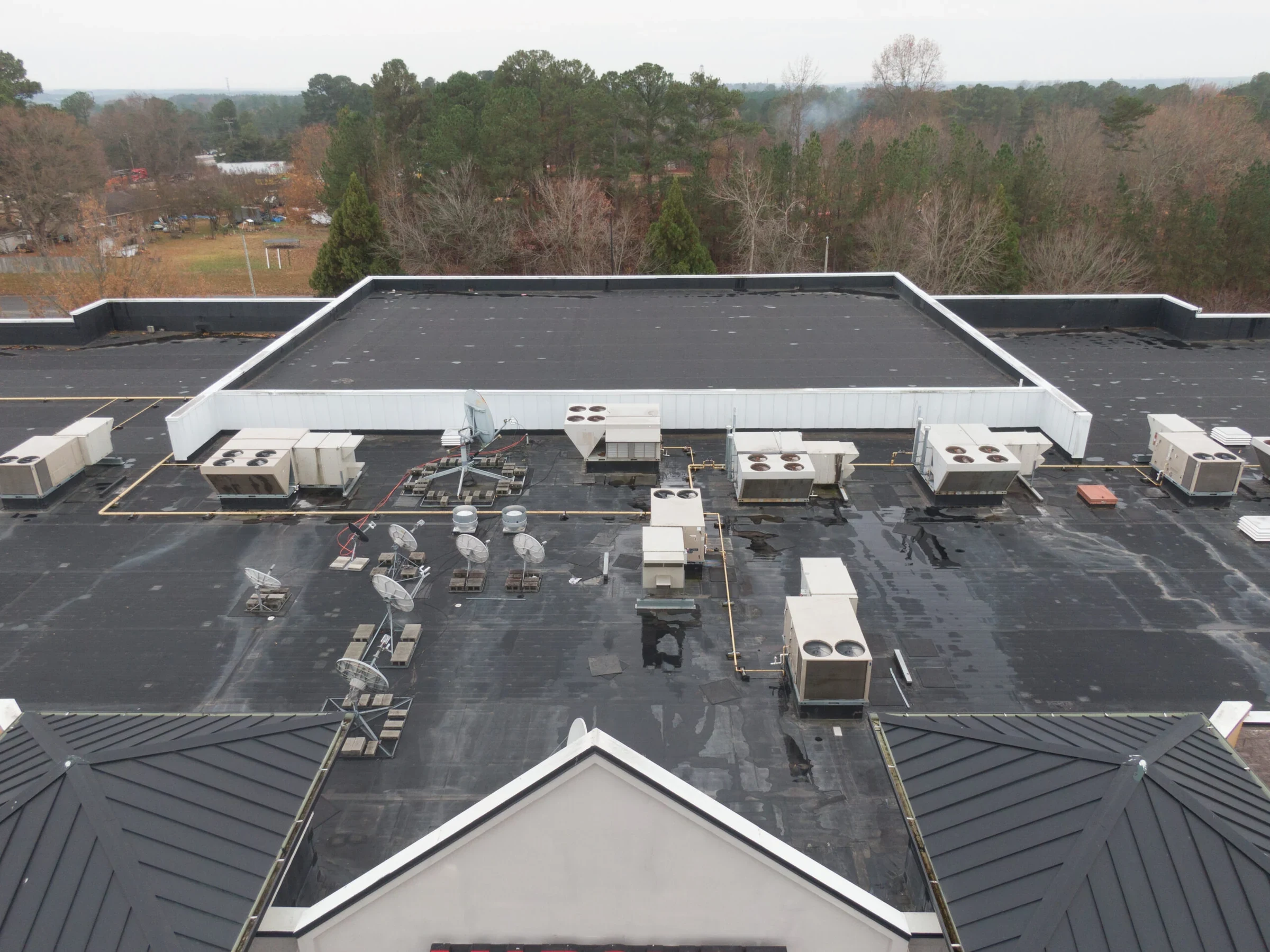
The distribution buildout along the DIA corridor and through Commerce City and Henderson keeps adding low-slope warehouse roofs measured in acres, not squares. These buildings carry real capital value in inventory and equipment underneath a single membrane, and an owner or REIT holding that asset for a ten-year hold period is thinking about downside risk differently than a small retail landlord. Eighty-mil buys more material between the roof surface and the deck before a hail event or a mechanical impact becomes a leak.
We also see 80-mil requested directly by property management firms and REITs that standardize their spec across a multi-building portfolio, because it simplifies budgeting across sites with varying exposure.
FM 4473 and Class 4 Assemblies
Eighty-mil TPO shows up far more often in UL 2218 Class 4 and FM 4473 Severe Hail-rated assemblies than 60-mil does, particularly when paired with a high-density polyiso or gypsum cover board. The thicker membrane resists puncture and denting from the steel-ball and ice-ball drop tests these standards use to simulate large hail, and that resistance translates directly to fewer post-storm callback repairs on a warehouse roof this size.
For distribution buildings specifically, we spec the cover board and membrane together as one impact-rated system rather than treating them as separate line items, because the rating only holds for the tested assembly, not any 80-mil membrane over any board.
Wind Load on Open Plains Roofs
The land east of Aurora toward Bennett and Watkins is open plains, and wind design pressures on warehouse roofs out there run higher than a sheltered urban site would see. Eighty-mil membrane holds better under mechanical fastener plate pull-through in sustained wind events, and the added weight per square foot contributes to a more stable field membrane in ballasted or partially adhered systems.
We calculate wind uplift design pressure per ASCE 7 for the specific address before finalizing fastening pattern, corner and perimeter zone spacing, and field attachment spacing. The gauge is one variable in that calculation, not the whole answer.
UV and Long-Term Membrane Integrity
At roughly 5,400 feet, solar UV intensity is higher than at sea level, and a distribution roof this size represents a long-term capital asset that owners hold for a decade or more. Eighty-mil membrane has more sacrificial material in the top ply before UV degradation reaches the reinforcing scrim, which extends the practical service window before a recover becomes necessary.
We run reflectivity and emissivity numbers from the membrane's product data sheet into the energy conversation for buildings large enough that rooftop solar load affects HVAC sizing.
- Big-box distribution and fulfillment warehouses along the DIA corridor
- Cold storage and food-processing facilities with heavy rooftop mechanical loads
- Multi-building REIT portfolios standardizing on one impact-rated spec
- Open-plains sites with elevated wind design pressures east of Aurora
- Roofs with a documented hail-loss claim history
Budgeting the Premium Against the Hold Period
Eighty-mil membrane costs more per square foot than 60-mil, both in raw material and in the labor to weld a heavier sheet. On a 200,000-square-foot distribution roof, that premium is a real number on the capital plan, so we present it against the expected hold period and the building's actual loss history, not as a default upsell.
For an owner planning a five-year hold, the math can favor 60-mil with a planned recover later. For an owner or REIT holding for the long term with active tenants underneath, the 80-mil premium usually pencils out against fewer emergency repair calls and a longer interval before the next capital reroof.
We also factor routine inspection frequency into that comparison. A thinner membrane on a high-exposure roof typically needs more frequent post-storm walk-throughs to catch damage before it becomes an active leak, and the labor cost of those visits over a ten-year hold is a real number, even though it rarely shows up on the initial reroof bid. On a multi-building portfolio, that inspection labor scales with square footage, so a single gauge decision at reroof time echoes through every storm season afterward.
Common Questions on 80-Mil TPO Specs
Is 80-mil TPO required for warehouse roofs near DIA?
Not by code, but it is what we typically recommend given wind exposure and hail history in that corridor. The final spec depends on the building's design pressure and the owner's hold period.
Does 80-mil TPO automatically carry a Class 4 hail rating?
No. The rating applies to a tested assembly that includes the cover board and attachment method, not the membrane alone. We spec the full assembly to match the intended rating.
How much more does 80-mil cost compared to 60-mil?
The premium varies with current material pricing and order volume. We put both gauges on the estimate side by side so the cost difference is visible before a decision is made.
Can 80-mil TPO be mechanically fastened instead of fully adhered?
Yes, depending on deck type and the wind uplift calculation for the address. Fastening pattern is engineered per roof, not assumed from the membrane gauge.
Does the heavier gauge change the warranty term?
Warranty terms are set by the manufacturer based on the full assembly, membrane gauge included. We review the specific warranty document with the owner before the roof is specified.