Black EPDM for Older Roof Stock in Englewood and Littleton
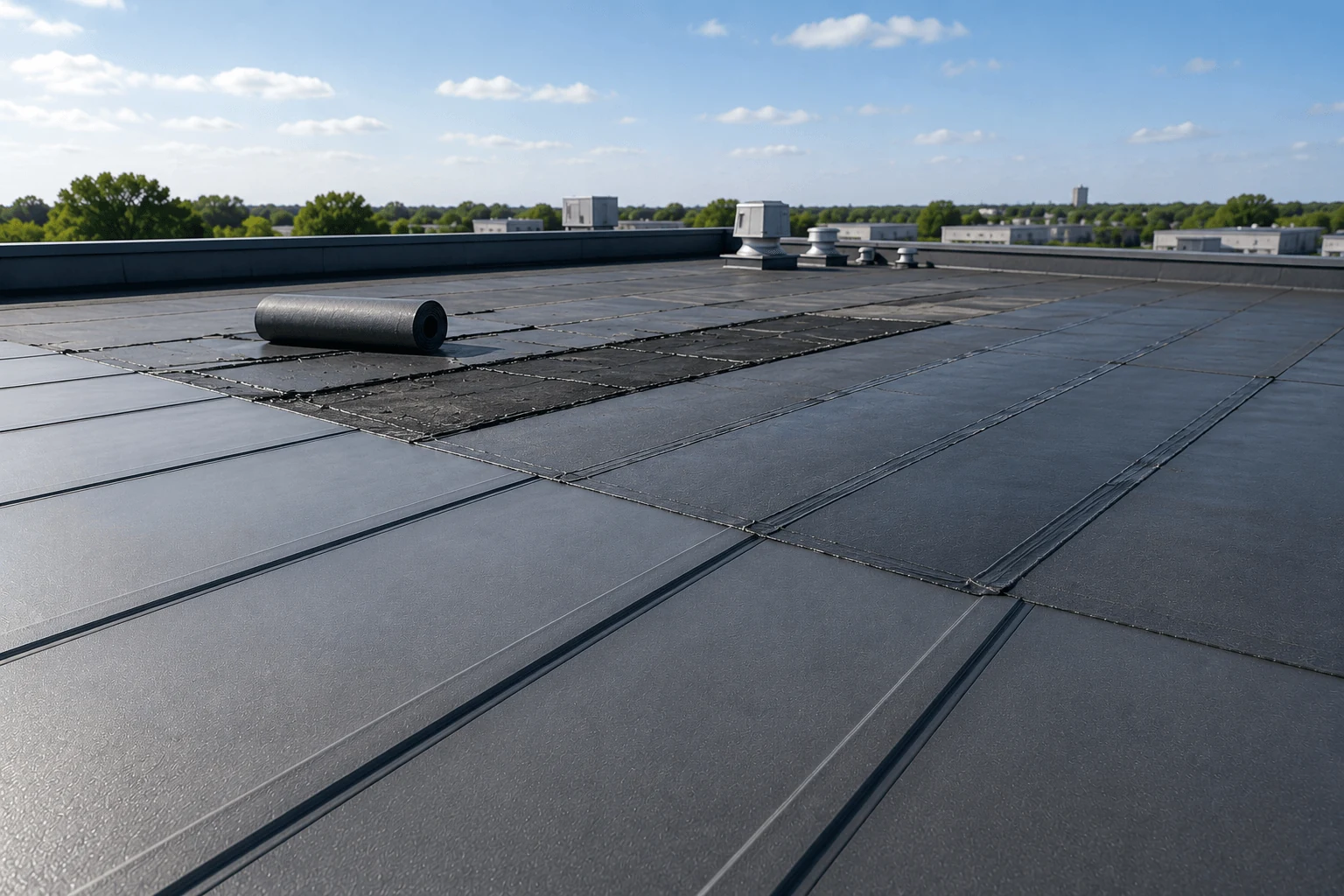
Black EPDM is the membrane we bring up most often on established buildings around Englewood, Littleton, and Sheridan, where the roof deck and the surrounding building were both built before single-ply membranes were the default choice.
Rubber Chemistry, Not Rigid-Sheet Chemistry
EPDM is a synthetic rubber, and it behaves differently under impact than a thermoplastic like TPO or PVC. Instead of resisting a hail strike as a rigid sheet, the membrane flexes and rebounds, which is a genuinely different mechanism for surviving impact than a stiffer top ply. On older buildings with irregular decking or settled framing, that flexibility also helps the membrane tolerate minor deck movement without stressing the field the way a stiffer sheet can.
Sixty-mil and 90-mil are the two gauges we quote most often for black EPDM in this market, and the thicker gauge is the one we lean toward on any roof with documented hail claims on file.
Cold Flexibility Through the Freeze-Thaw Swing
Colorado's front range temperature swings are hard on membranes that stiffen as they cool. EPDM retains flexibility at low temperatures better than most single-ply alternatives, which matters on a shoulder-season day in Sheridan or Littleton when the roof surface can swing from below freezing at sunrise to well above it by early afternoon. That flexibility is part of why EPDM has stayed in continuous use on commercial low-slope roofs for decades, well before TPO became the default spec.
Seaming on EPDM is adhesive-based rather than heat-welded, and we still work within a temperature and moisture window for a proper cure, but that window is generally more forgiving than TPO's hot-air welding requirements in cold weather.
UV Absorption and the Trade-Off at Altitude
Black membrane absorbs solar radiation rather than reflecting it, and at roughly 5,400 feet the UV and solar load hitting an Aurora-area roof is higher than at sea level. That absorption raises surface temperature on a black EPDM roof compared to a white membrane, which is a real trade-off against a reflective system, particularly on a building where rooftop HVAC load or a cool-roof requirement is part of the conversation.
Where surface temperature and energy load are not driving the decision, black EPDM's UV-stable rubber compounding holds up over long service life, and the membrane does not carry the granule-loss or chalking issues that some other roofing surfaces develop under sustained sun exposure.
Where We Spec It on Aurora-Area Buildings
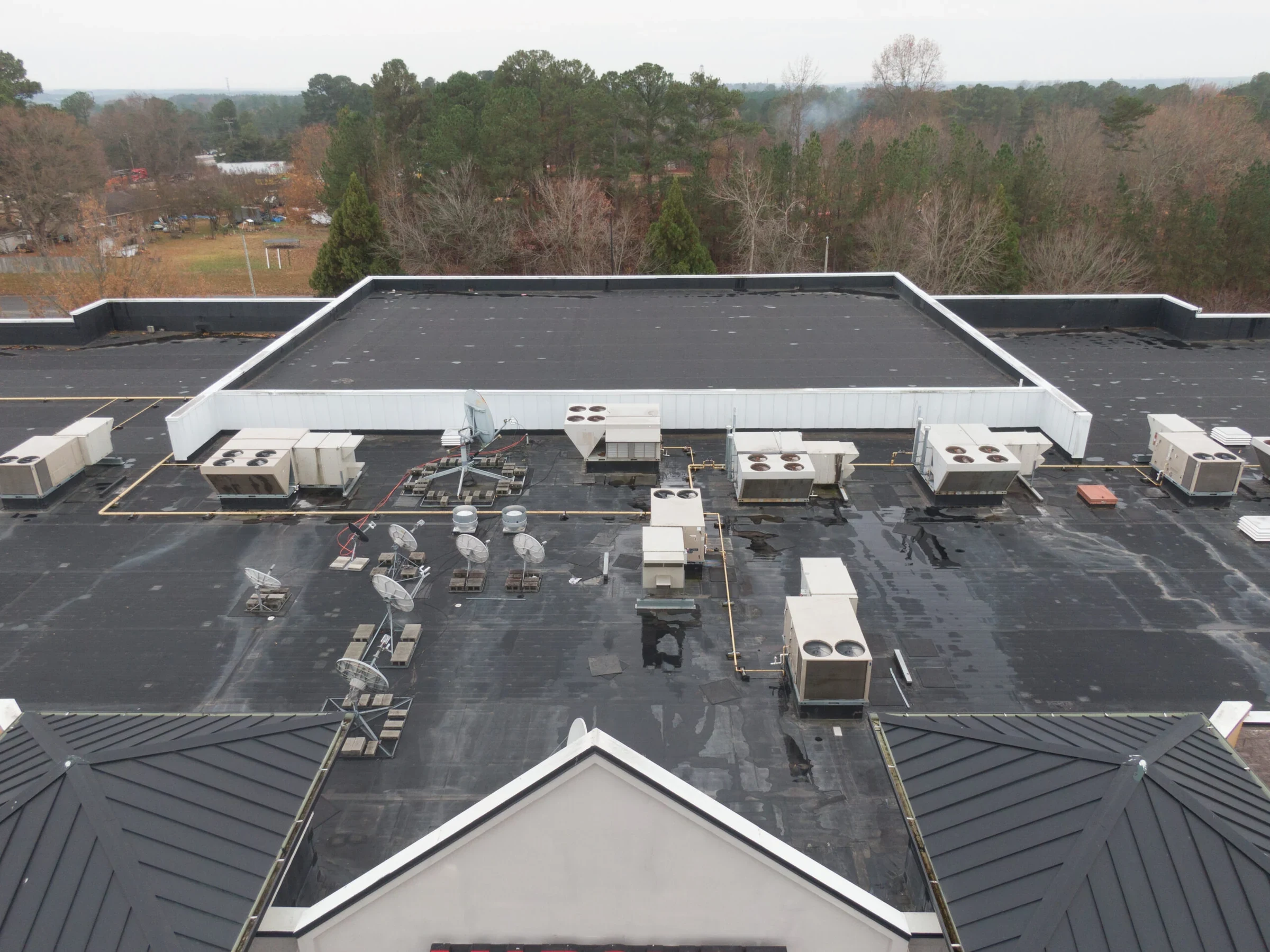
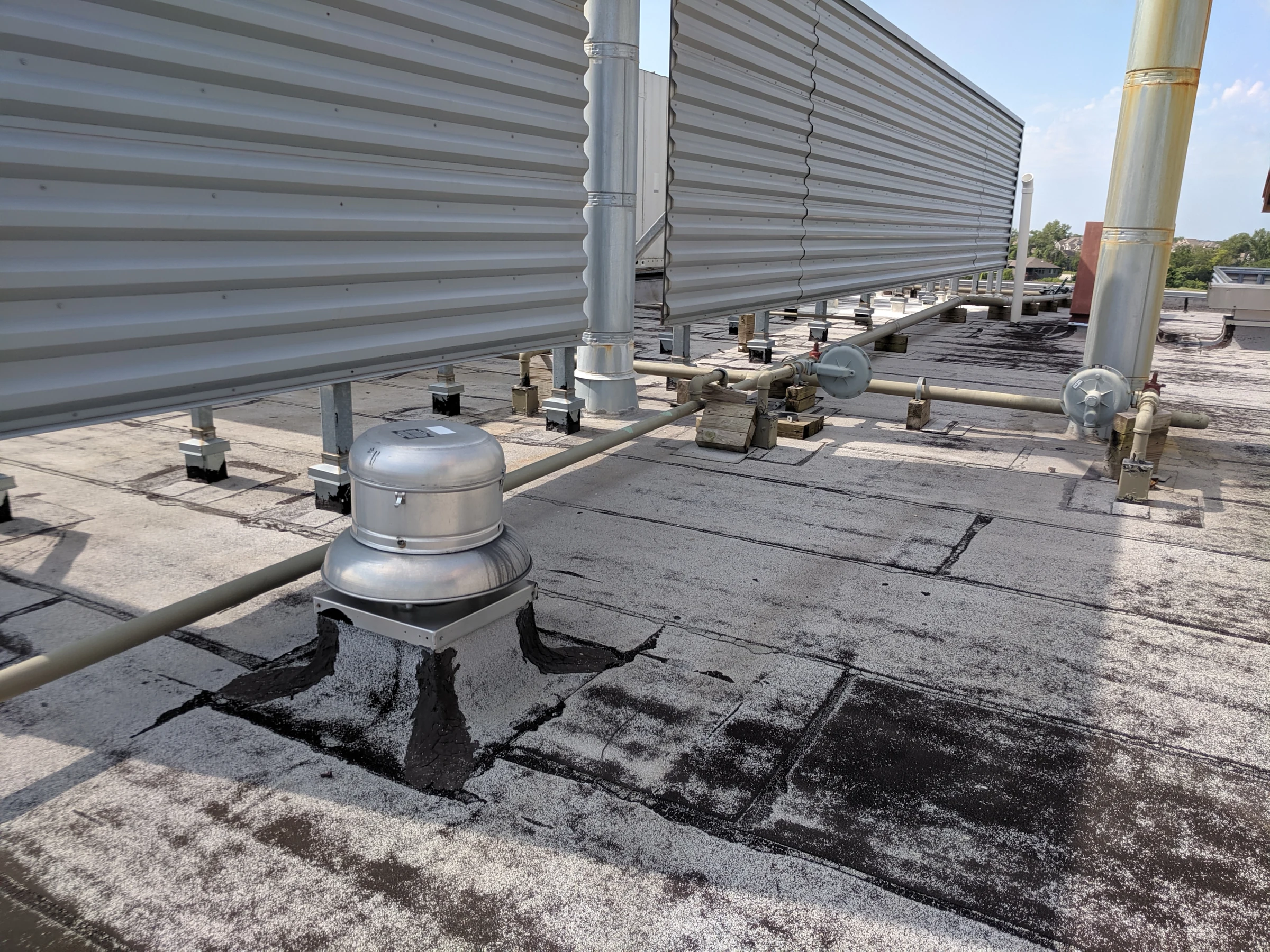
The Santa Fe industrial corridor through Englewood and Sheridan carries a lot of older low-slope buildings with mixed roofing history, patch repairs, and multiple penetrations added over the years. Black EPDM's field-seamable sheet size and adhesive-flashing detailing make it a practical recover option on roofs like that, where a full tear-off to bare deck is not always the first move we recommend.
Glendale's dense retail and office enclave has a similar mix of older buildings with tight rooftop footprints, where large membrane sheets and fewer field seams simplify the job compared to a roof full of narrow rolled-goods laps. We size EPDM sheet width to the specific roof geometry rather than defaulting to one standard width across every job. Fewer seams generally means fewer long-term maintenance points on a roof that already carries decades of patch history.
- Older industrial and light-manufacturing buildings with irregular deck conditions
- Recover projects over sound, dry existing insulation
- Roofs with heavy penetration counts from accumulated mechanical additions
- Buildings where cool-roof reflectivity is not a code or lease requirement
- Low-traffic roofs where rubber flexibility outweighs reflective surface benefits
Budgeting a Black EPDM Recover Against Full Replacement
Recover-eligible black EPDM projects generally price below a full tear-off and replacement, because the existing insulation and deck stay in place. That said, recover eligibility depends on how much wet insulation is already in the roof, how many layers already exist, and what the local code allows for that building. We probe the existing roof before quoting a recover price, not after signing the contract.
Where the existing roof is dry and structurally sound, black EPDM recover is usually the most direct route to extending roof life at the lowest cost per square foot on this class of building. We put the probe results and the recover-versus-replace recommendation in writing before quoting a final number, so the owner is deciding based on documented roof conditions rather than a verbal impression from the walk.
Black EPDM Questions From Building Owners
Does black EPDM fade or crack faster than TPO in direct sun?
No. EPDM's rubber compounding is UV-stable and holds up over long service life, though the black surface does run hotter than a reflective white membrane.
Can black EPDM be installed over an existing roof?
Often, yes, if the existing insulation is dry and the layer count and code allow a recover. We confirm both before quoting.
Is EPDM seaming reliable in Colorado's cold shoulder seasons?
Adhesive seaming has a workable temperature and moisture window that is generally more forgiving than heat-welding. We schedule seam work inside that window regardless of season.
Should every recover switch to white membrane by default?
White reflectivity helps with surface temperature and cool-roof requirements, but it is not always the deciding factor. Where reflectivity is not driving the decision, black EPDM's cost and flexibility can be the better fit.
How long does black EPDM typically last on a low-traffic roof?
Service life depends on drainage, penetration count, and traffic more than membrane color. We evaluate the specific roof before giving a service-life estimate.