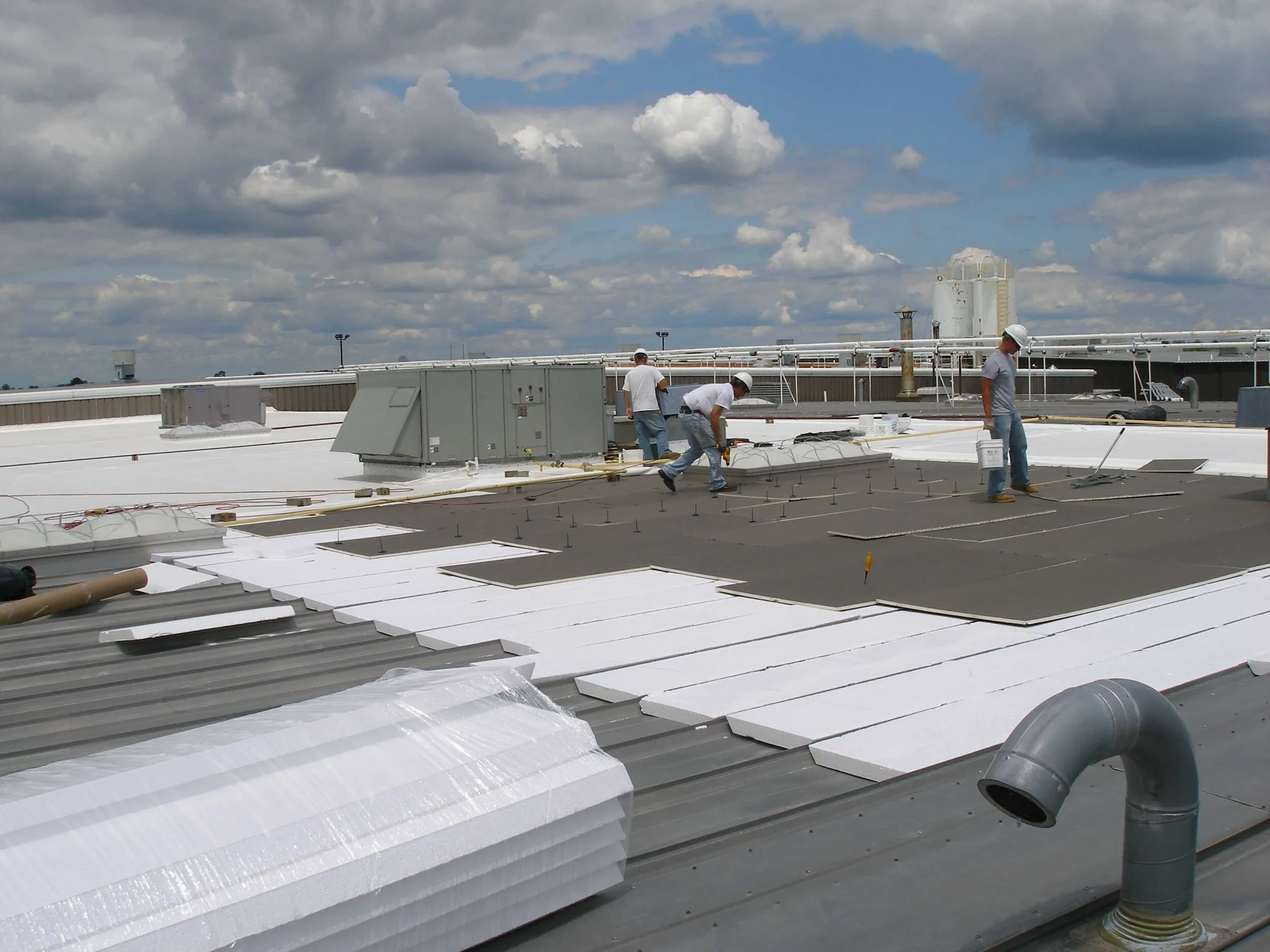
TPO for the Aerotropolis Warehouse Corridor
TPO is the membrane going onto almost every new cross-dock and distribution building rising along Pena Boulevard, through Commerce City, and out toward Watkins and Bennett. It welds fast across acre-scale roof areas and reflects heat better than the dark membranes it replaced. This page covers how we spec it, weld it, and price it.
Why TPO Is the Default on New Warehouse Construction
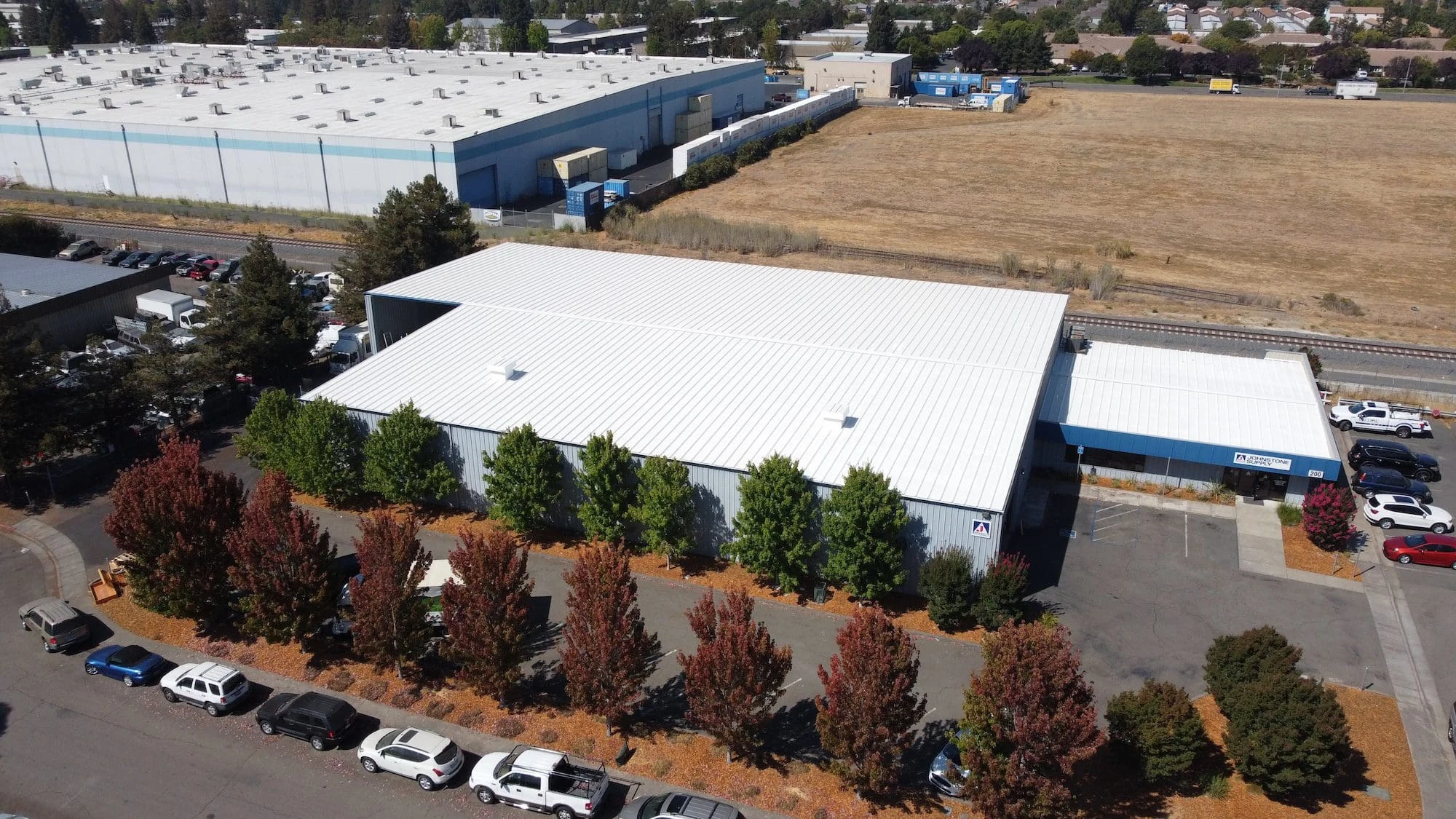
Tilt-up concrete and pre-engineered metal buildings dominate new construction along the DIA corridor, and most of them run 200,000 square feet or more under a single flat roof. Hot-air welded TPO seams let a crew close in that kind of area far faster than an adhesive-based system, which matters when the general contractor needs the roof watertight before interior trades start.
A white or light-gray TPO field also runs cooler than the built-up and modified bitumen roofs it's replacing on older buildings. Lower surface temperatures slow the thermal cycling that ages a membrane, and on a building with rooftop refrigeration units serving cold-storage tenants, a cooler roof surface takes some of the load off the condensers sitting on top of it.
Crew scheduling around an active distribution center adds its own layer to the estimate beyond material and labor. Many of these buildings run three shifts, and dock doors along the loading side stay busy well past sunset. We stage material, plan crane picks, and route foot traffic around active dock lanes so the roof gets closed in without shutting down operations underneath it.
60-Mil Field, 80-Mil Where Traffic and Equipment Concentrate
Standard field membrane on a distribution center runs 60-mil reinforced TPO. We move up to 80-mil around the areas that take repeated foot traffic and equipment loading rather than spec'ing one thickness across the whole roof -- that keeps the budget from covering square footage that never sees a boot.
- Rooftop HVAC and refrigeration unit curbs
- Technician walk pads and access routes
- Roof drains and scuppers
- Expansion joints
- Parapet wall terminations
Wind uplift is another line item that changes the fastening spec beyond membrane thickness alone. Front Range wind events push hard enough through this corridor that perimeter and corner zones need tighter fastener spacing than the field, and we price that as its own zone rather than running one pattern across the entire roof. A fastening plan that skips this distinction usually shows it first at the corners, where uplift pressure concentrates hardest during a windstorm.
What a Hailstorm Actually Does to a TPO Field
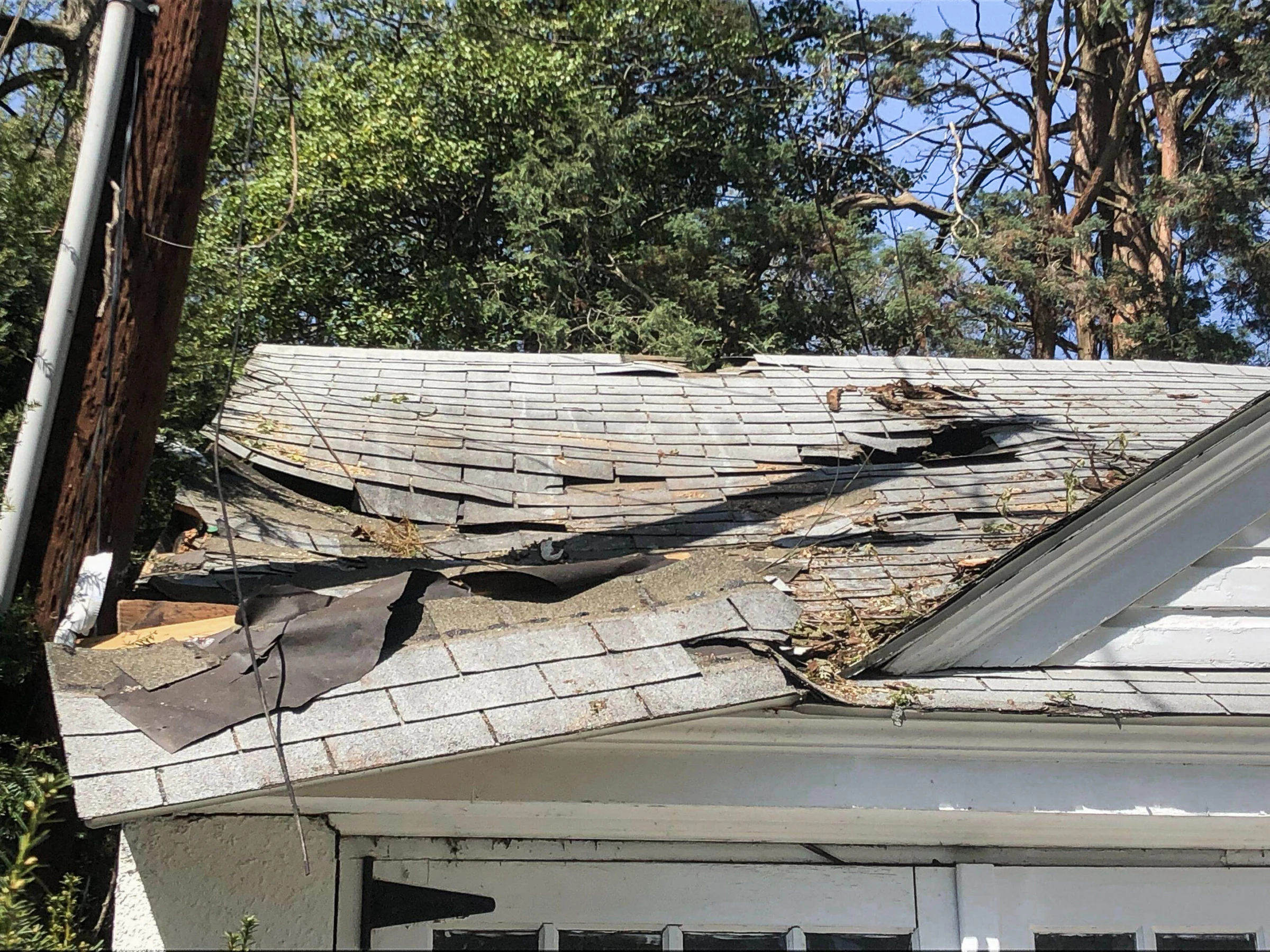
Hail bruises TPO before it punctures it. A hard enough hit can crack the surface or drive a fastener plate up through the membrane from underneath, but a lot of what shows up after a storm is cosmetic scuffing that doesn't compromise the waterproofing. Telling the difference requires walking the roof and probing suspect spots, not judging it from photos taken at ground level.
Some TPO products carry a Class 4 impact rating, which matters in conversations with an insurance carrier even though it doesn't make a roof hail-proof on its own. We factor that rating into the spec on request, particularly on buildings where the owner is already managing a pattern of storm claims year over year.
We also check anchor point hardware and fall-protection tie-offs during a post-hail walk, since a lot of distribution roofs added that equipment years after original construction and it doesn't always get inspected on the same cycle as the membrane itself.
Recover Over Existing TPO or Full Tear-Off
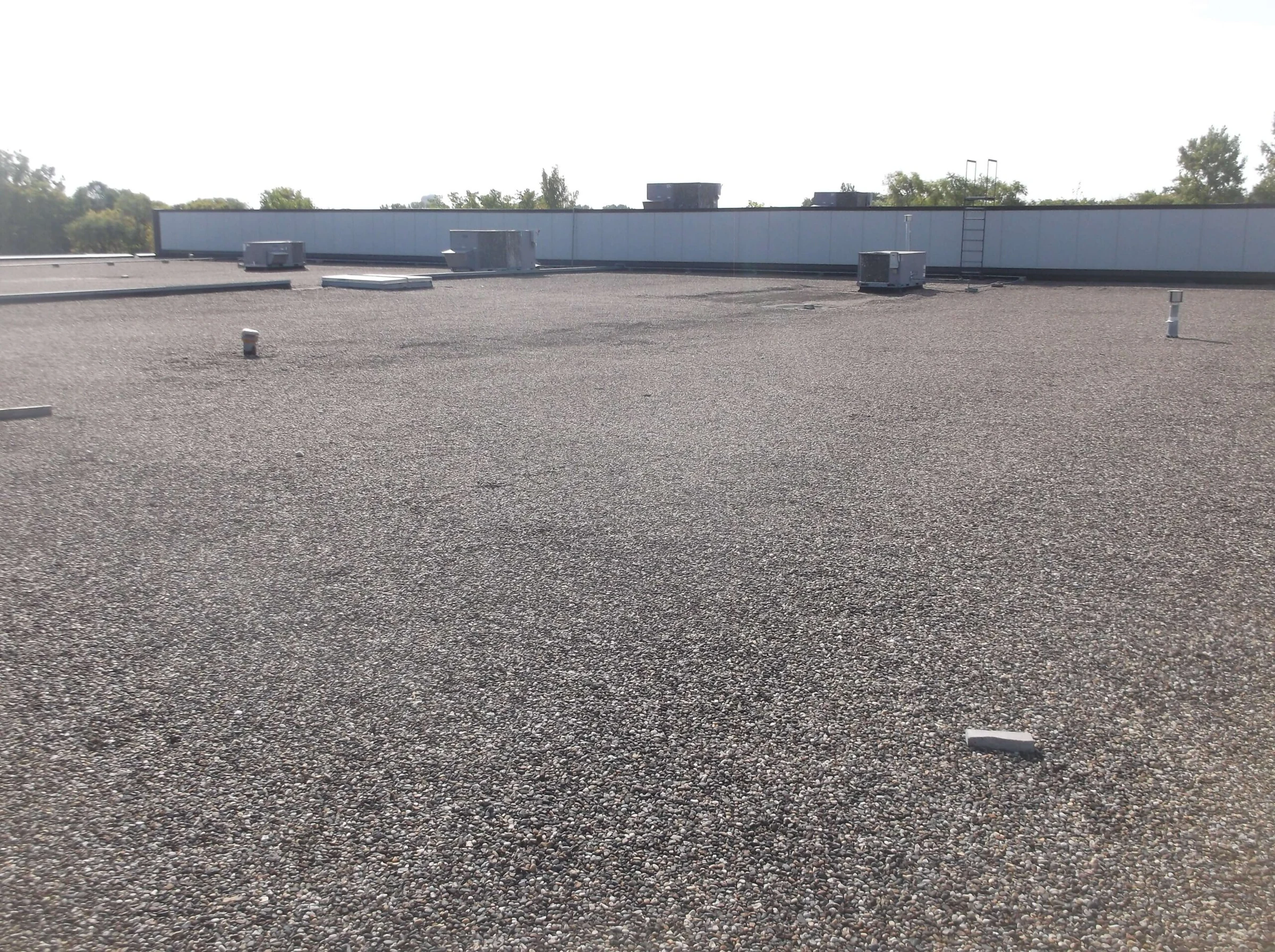
If the deck and insulation underneath test dry, we can often weld a new TPO field directly over sound existing membrane rather than tearing everything off first. That keeps the building watertight through the entire project and cuts disposal cost out of the budget completely.
A moisture scan is what actually decides that question, not the age of the roof by itself. Wet insulation anywhere on the field means tear-off is the only honest number to write, because welding a new membrane over trapped moisture just delays the same repair at a higher cost later. See our recover and overlay page for how we walk owners through that decision.
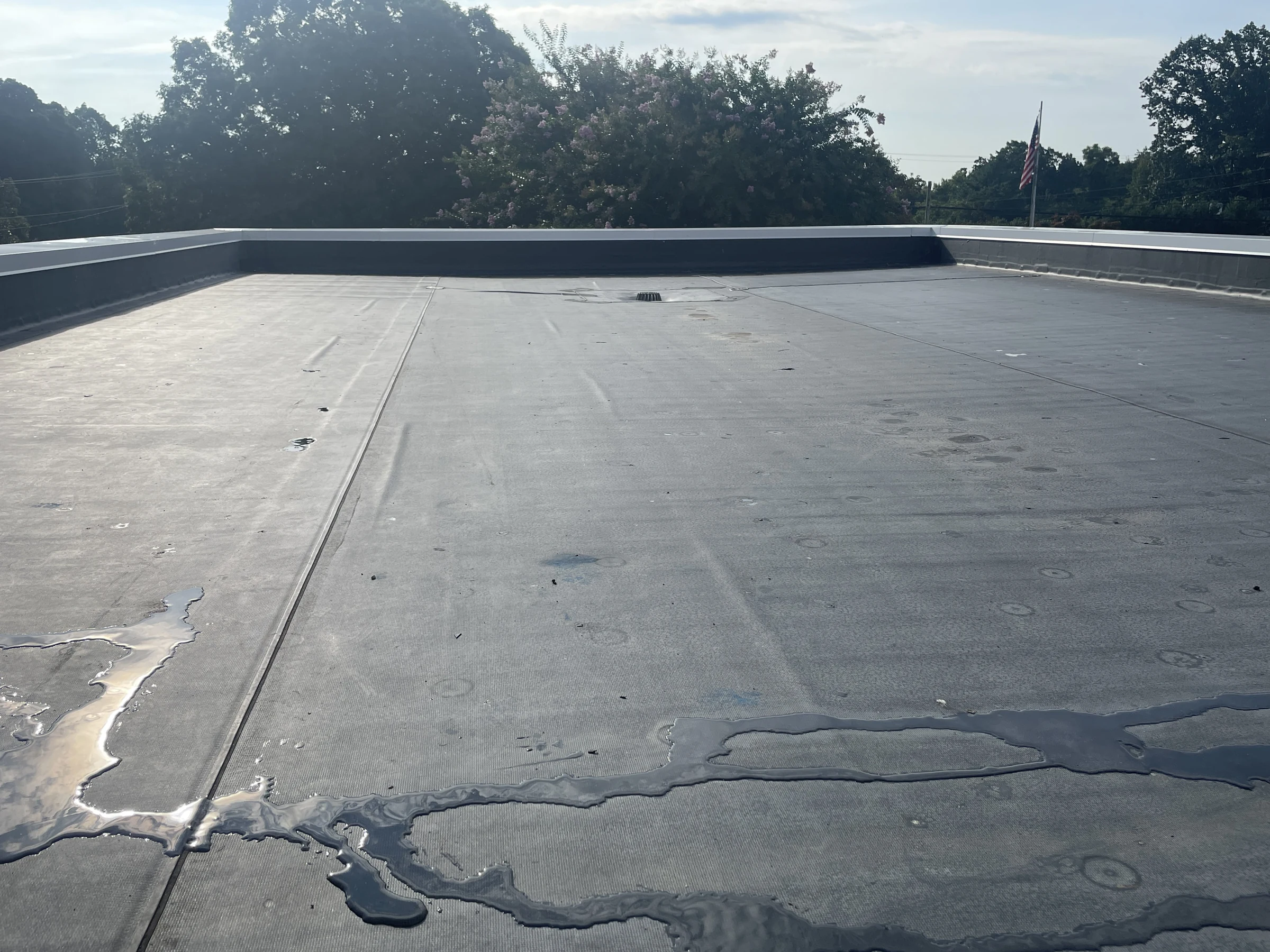
Tapered insulation is worth pricing at the same time as a recover or tear-off decision. A lot of ponding complaints on flat warehouse roofs trace back to a deck that never had built-in slope toward the drains, and correcting that during the reroof usually costs less than repeating the same drainage layout and dealing with the same complaint again in a few years.
Questions Owners Ask Before We Quote TPO
How much does 80-mil TPO cost over 60-mil?
The material premium is real but modest; the bigger cost driver is how much of the roof actually needs it. We spec 80-mil selectively rather than across the whole field to keep that premium contained.
Does TPO handle standing water on a flat warehouse roof?
The membrane tolerates short-term ponding, but standing water accelerates dirt buildup and UV wear at that spot. We'd rather correct the drainage slope than count on the membrane to shrug it off indefinitely.
Can you weld new TPO over an existing EPDM roof?
Not directly -- TPO doesn't bond chemically to EPDM. A recover over an EPDM roof needs a separator layer or a different approach, which we work out during the site survey.
Do you inspect TPO roofs after every hailstorm?
We recommend it for any building with a history of storm claims or known drainage issues. A walk within a couple weeks of a storm catches damage while it's still easy to document.
How long does a TPO roof last on a warehouse out here?
Service life depends more on maintenance and rooftop traffic than on the membrane alone. A properly installed and maintained TPO system is built for decades of use in this climate.