Make repair, restoration, and replacement distinct decisions
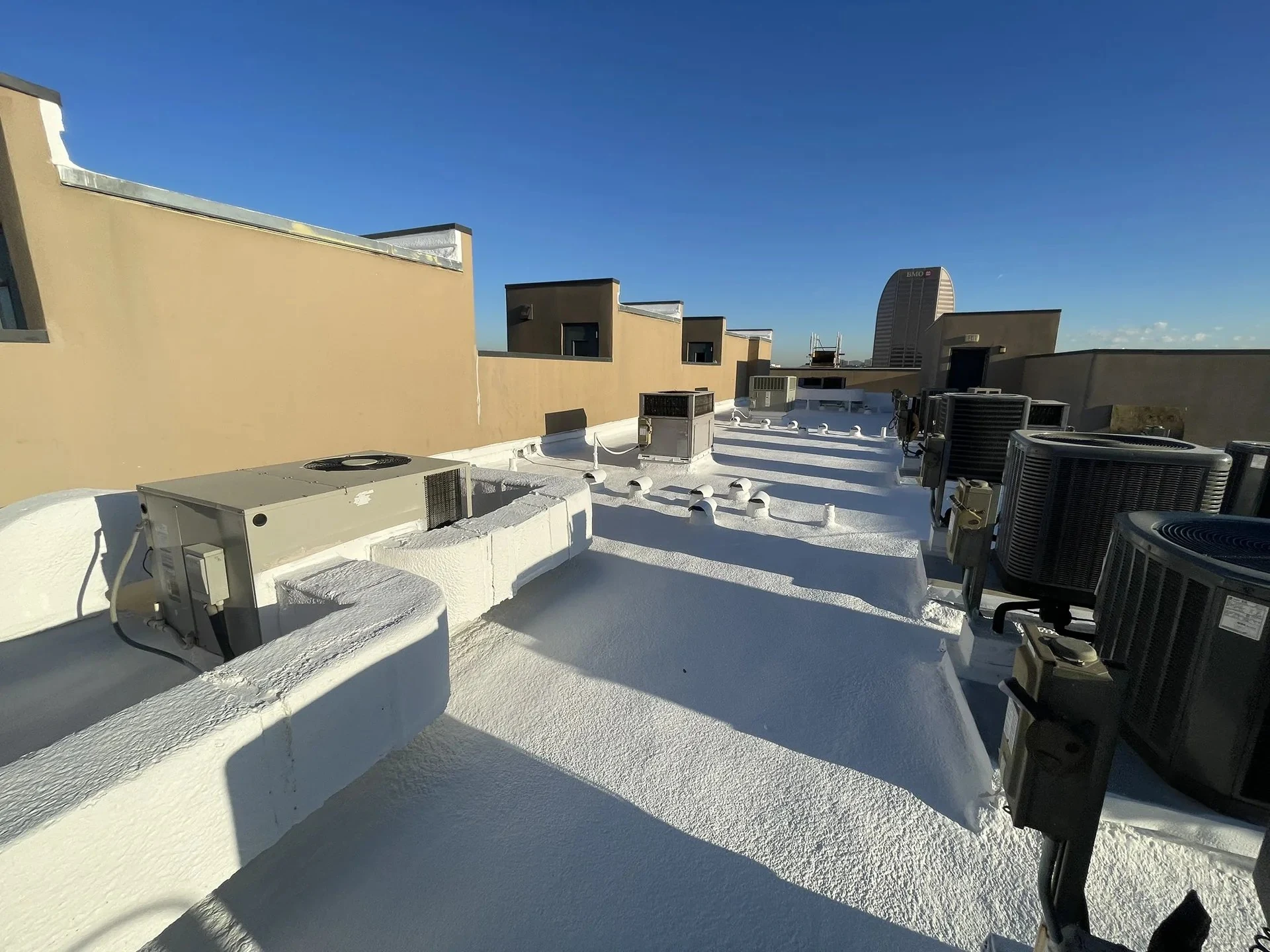
The decision point is whether the roof is a viable restoration candidate, whether only selected areas qualify, or whether recover or replacement is the more responsible path. The evidence may support a small permanent repair, a broader corrective scope, a restoration evaluation, recover design, or tear-off, but the report needs to show why. The option matrix should address present failure, remaining risk, investigation still required, installation disruption, anticipated service interval, and future maintenance. Unknown inputs should be visible rather than buried in an allowance. Ownership should be able to see why a roof can be maintained, why it qualifies for restoration, or why removal is necessary. The report earns that conclusion through field evidence rather than sales urgency.
Turn the visit into a usable next step
After this scope, the record should advance to a documented comparison of repair, restoration, recover, and replacement rather than a coating-first recommendation. Carrying the same roof-zone names and evidence forward prevents the next visit from starting with an empty file. The record should support both field work and management review. Technicians need locations and prior details; ownership needs priorities, open risk, completed spending, next inspection dates, and a defensible future sequence. The result is more than a completed patch or proposal. It is a controlled sequence from immediate response to documented condition, from condition to an appropriate option, and from that option to scheduled stewardship of the roof asset.
A useful response starts before roof access
The first conversation about an aging but potentially serviceable roof where owners need to know whether repairs and a coating or recover system can extend useful life without concealing wet or failed materials should establish the Aurora property address, contact on site, roof-access method, affected interior area, when water was first observed, whether entry is active, and any immediate safety concern. The caller should not be asked to diagnose the assembly from the floor. A short description of timing, location, volume, affected equipment, and previous occurrences is more useful than guessing which roof product failed. Clear intake notes reduce wasted roof time and prevent the handoff from losing urgent details. They also create the first event in the roof history that later inspections and repair records can reference.
Price the known work without hiding the unknowns
Pricing is easier to evaluate when the scope shows which conditions were measured, which were observed but not opened, and which remain concealed. Unit prices or allowances can address uncertainty without pretending the quantity is already known. Schedule assumptions also belong beside price: weather windows, material lead time, permits, shutdowns, tenant coordination, daily dry-in, and access restrictions. An unexplained low number can become an expensive sequence of changes if these constraints are omitted. A reviewable proposal lets ownership compare boundaries, evidence, materials, quantities, disruption, and closeout-not just totals. The goal is a scope that remains understandable after the salesperson leaves the room.
How Aurora operating conditions shape the review
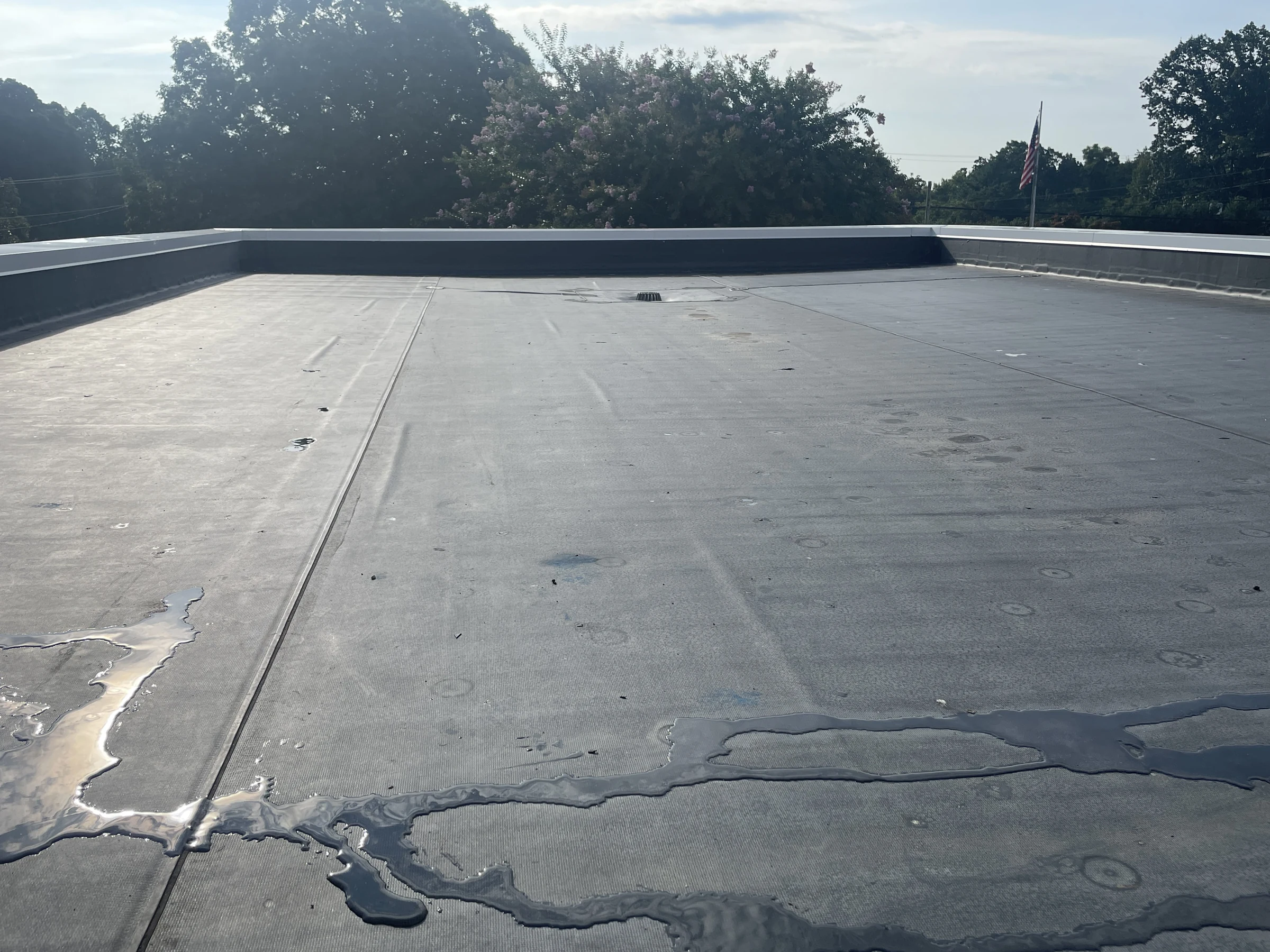
A Aurora roof review has to account for hail exposure, snow, rapid temperature swings, high ultraviolet exposure, and freeze-thaw movement. Those conditions affect access, observation timing, drying, and temporary protection before they affect the final recommendation. The review should connect the time and location of water entry with roof zones, elevations, drainage paths, and construction transitions. That map helps distinguish one isolated defect from several conditions activated by the same rainfall. This distinction protects the owner from treating a correlation as proof. It also lets the next technician revisit the precise unknown instead of repeating the entire investigation.
Build a roof record another decision-maker can use
For Commercial Roofers of Aurora, the field file should capture roof type and age, core or moisture findings, repair boundaries, substrate condition, adhesion results, drainage, penetrations, edge details, preparation, thickness assumptions, and exclusions. Each note needs a roof-area reference so a photograph or recommendation can be found again after the visit. The practical method is to confirm the existing assembly, investigate moisture, test adhesion where appropriate, define repairs and preparation, and verify that drainage and details can support the proposed system. Where destructive or electronic testing is proposed, the scope should identify its purpose, limitations, and restoration procedure before work begins. Observed facts, recommended actions, completed work, and open items should never share one unlabeled list. Separating them lets an off-site approver see exactly what was authorized and what still needs a decision.
Do not force different roof systems into one repair assumption
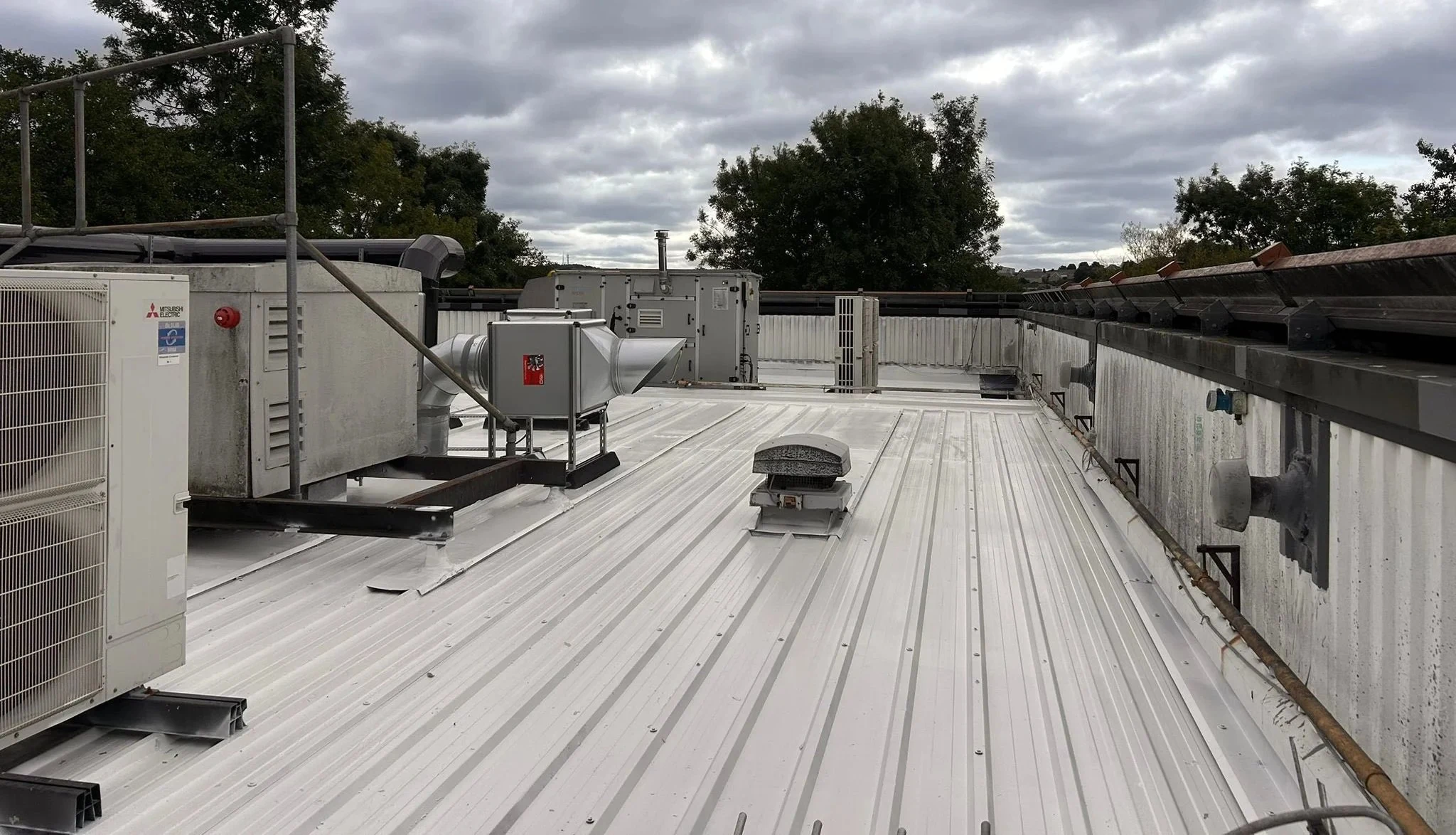
A detail that is repairable on PVC Roof Systems may require different preparation or materials on Silicone Roof Coating or EPDM White. Existing layers, surfacing, attachment, and earlier repair products matter before new materials are selected. Preparation and repair language must fit the substrate. Cleaning, drying, reinforcement, fastening, priming, welding, adhesion, and cure requirements should not be copied from one roof system to another without verification. Drainage stays in the analysis because a sound patch cannot correct water held against a curb, an overloaded outlet, or settlement at a low point. System language should support whether the roof is a viable restoration candidate, whether only selected areas qualify, or whether recover or replacement is the more responsible path instead of functioning as a product catalog.
Keep the occupied building in the scope
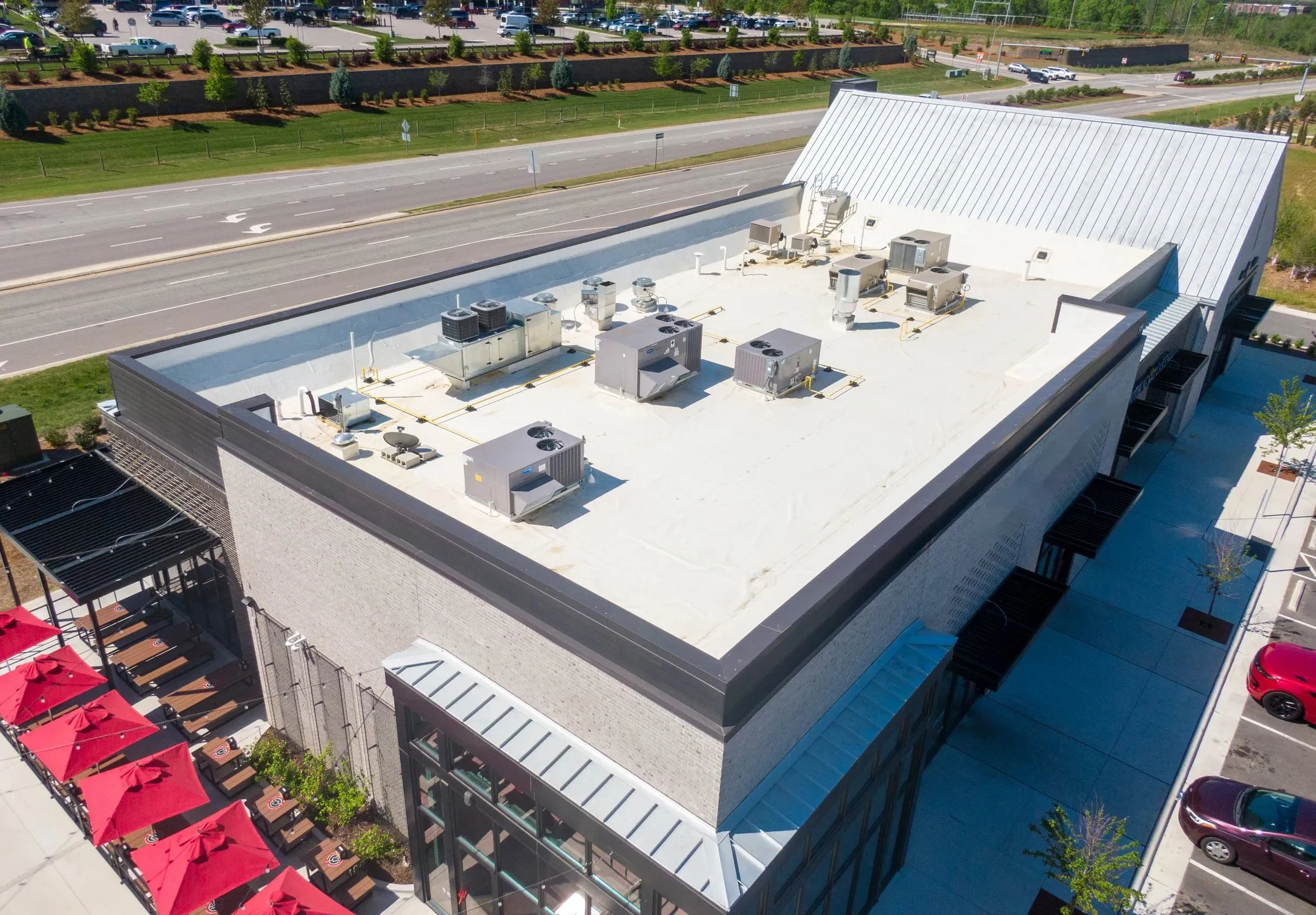
Building operations change how the same roof work is performed. On Insurance Restoration, Food Processing Cold Storage, or Government Public Sector, access, interior sensitivity, security, and working hours can define the safe sequence. Access and protection notes should cover ladders or hatches, staging, falling-object zones, odor and noise, equipment clearances, daily cleanup, weather stops, and the rooms directly below openings or test cuts. A dry-in can be appropriate during active weather even when permanent work must wait. The crew's daily record should identify every temporary edge, cover, ballast, drain protection, and remaining exposure before leaving the property.
Aurora decision checklist
- Map the interior symptom to a named roof area before selecting a repair detail.
- Record temporary measures separately from permanent work and list every open item.
- Verify drainage, penetrations, walls, edges, earlier repairs, and transitions around the affected area.
- State the observed roof assembly, unknown construction, access limits, and testing assumptions.
- Connect the recommendation to repair, restoration, replacement, maintenance, or capital-planning thresholds.
- Set the next inspection or follow-up date so the roof history continues after this visit.
Commercial roof decision questions
Does this condition automatically mean the roof must be replaced?
No. The review should establish whether the roof is a viable restoration candidate, whether only selected areas qualify, or whether recover or replacement is the more responsible path. Replacement becomes a defensible recommendation only when the field evidence, moisture, assembly condition, repair history, deck or attachment concerns, and lifecycle comparison support it.
What should the Aurora roof scope document?
It should document roof type and age, core or moisture findings, repair boundaries, substrate condition, adhesion results, drainage, penetrations, edge details, preparation, thickness assumptions, and exclusions. It should also label temporary and permanent work separately, state assumptions and exclusions, and identify the inspection or service step that follows the current scope.
How does an urgent call become a maintenance or capital plan?
The immediate visit creates the first roof-area record. A follow-up inspection establishes condition and priorities. Completed repairs, recurring observations, drain service, warranties, and future recommendations are then retained so maintenance stays scheduled and larger work can be placed into the appropriate capital year.