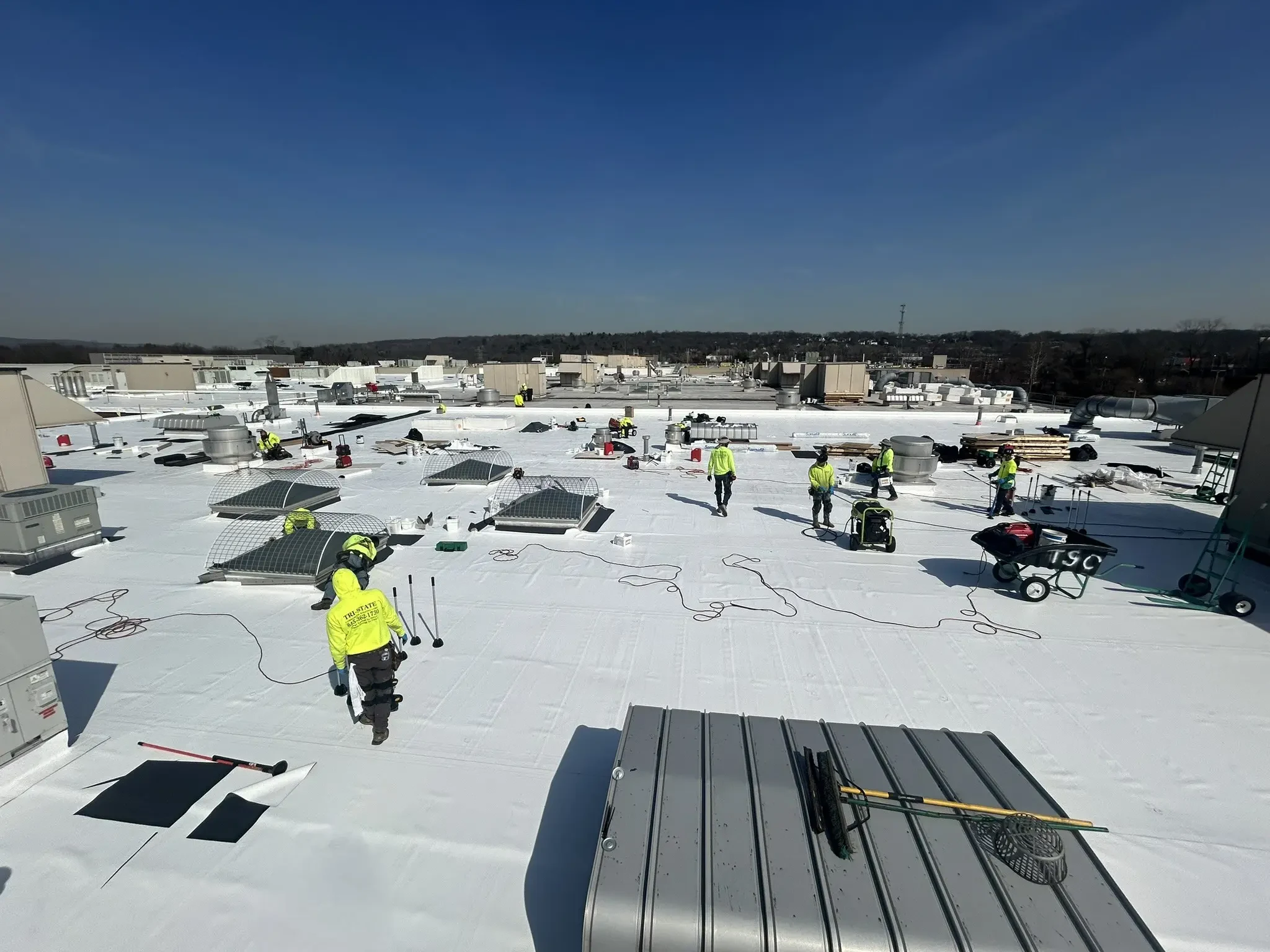
Sarnafil PVC for Chemical-Exposure Roofs on Anschutz-Adjacent Buildings
Sika Sarnafil is the PVC-focused manufacturer line we quote most often on hospital, lab, and food-adjacent buildings where the chemical and grease resistance of PVC membrane is the deciding factor rather than a preference.
A Global Manufacturer With a Long PVC Track Record
Sika is a Swiss multinational building-materials manufacturer, and Sarnafil is their long-established PVC roofing membrane brand, with a manufacturing history in reinforced PVC membrane that predates many competitors' entry into the category. That track record matters specifically for PVC, where long-term plasticizer retention and seam-weld consistency are the technical questions that separate a good PVC product from a mediocre one over a multi-decade service life.
Reinforced Membrane for Institutional Roofs
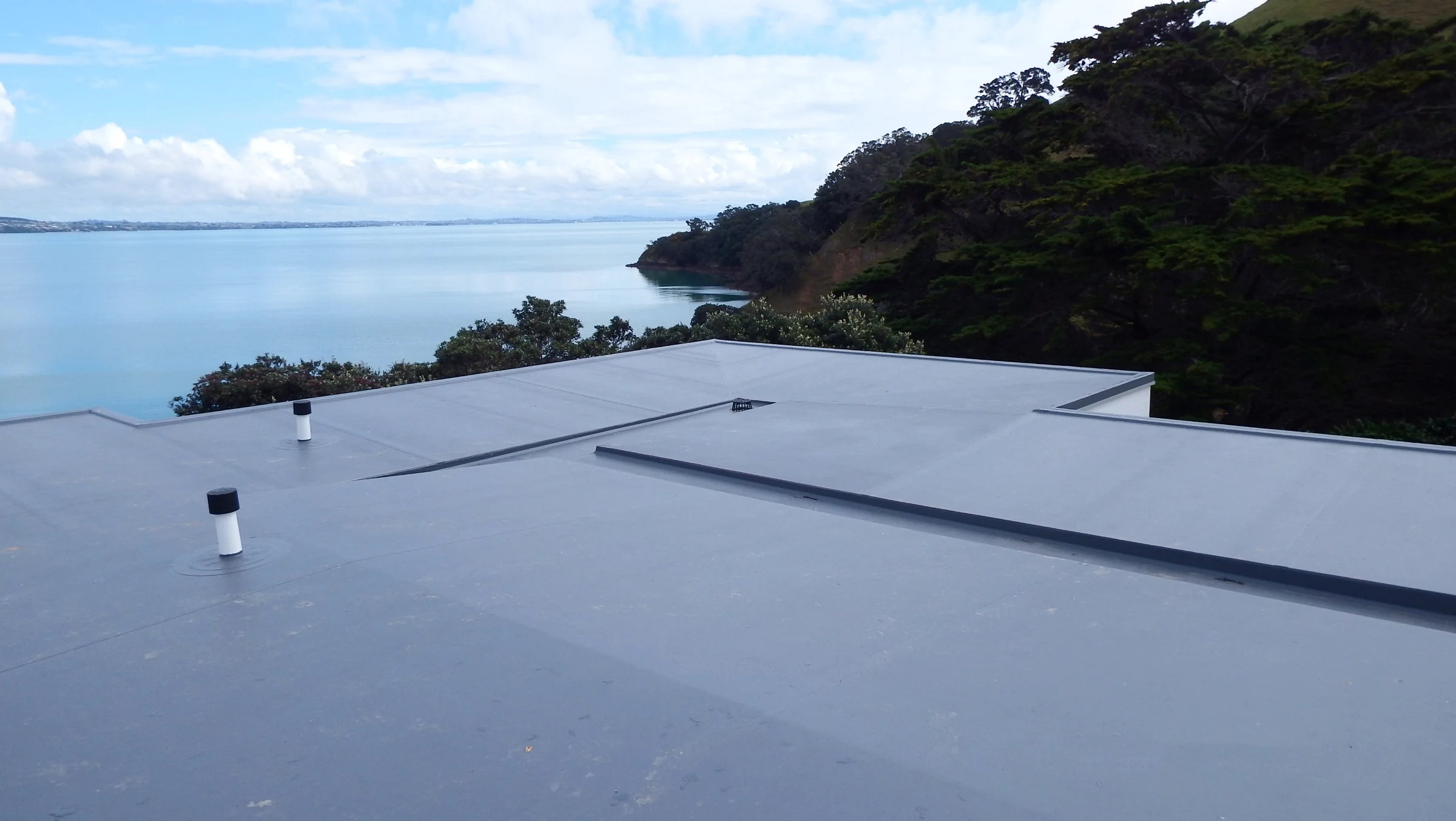
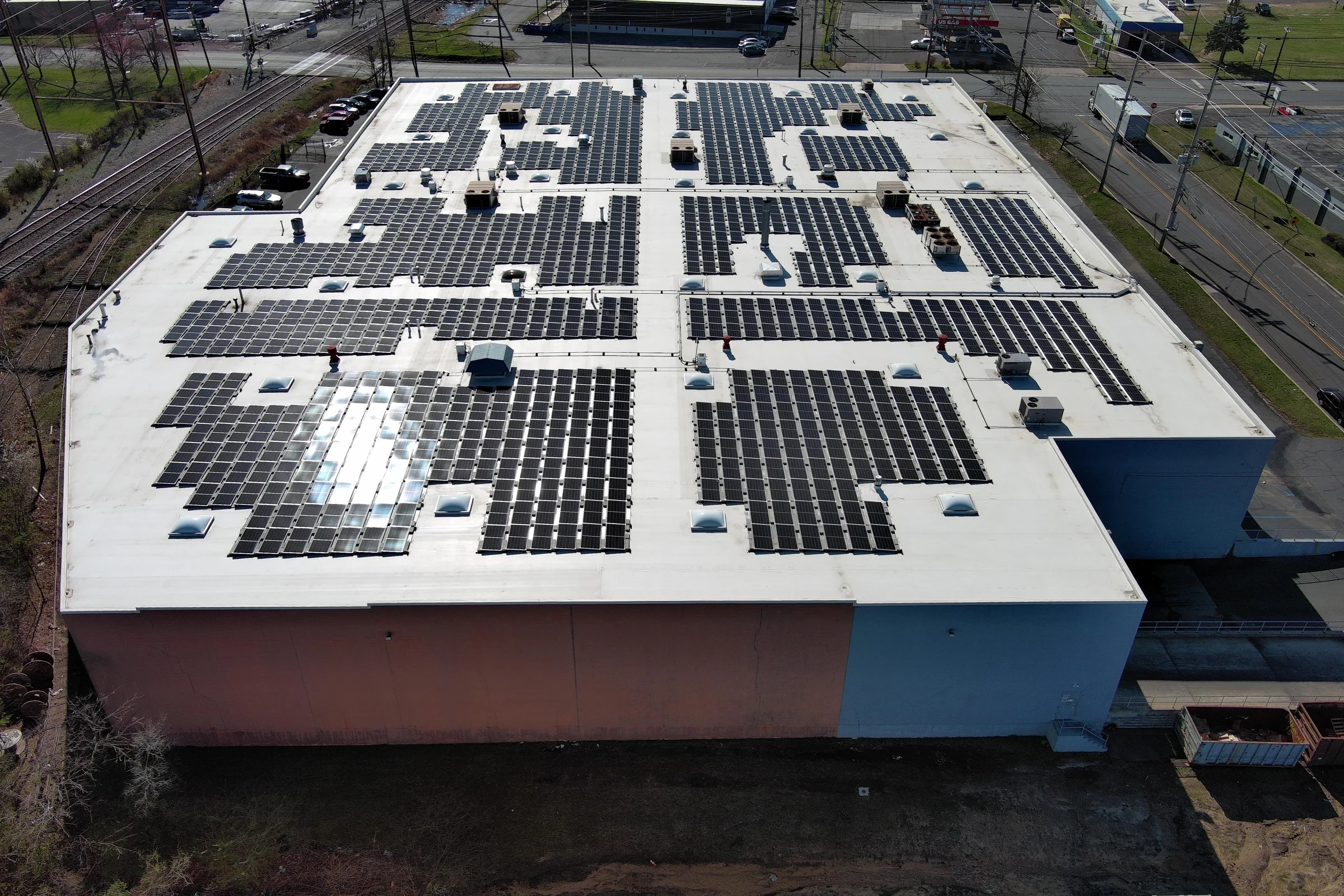
Sarnafil's reinforced PVC membrane, backed by fiberglass or polyester scrim depending on the product line, is what we spec on Anschutz Medical Campus-adjacent buildings and other hospital or lab facilities carrying kitchen exhaust, fume discharge, or generator exhaust across the roof surface. The scrim reinforcement is a meaningful factor in both puncture resistance and hail-impact performance when paired with an appropriate cover board.
Heat-Welded Seam Consistency
Like other PVC membranes, Sarnafil seams are hot-air welded into a monolithic joint rather than adhesive-bonded. Sarnafil's manufacturing tolerances on sheet thickness and weld-line consistency are a factor we evaluate directly on institutional roofs with a high penetration count, since a hospital or lab roof with dozens of curbs and stacks depends on consistent detail work at every welded transition, beyond a good field seam alone.
Where This Line Shows Up on Our Estimates
Beyond Fitzsimons, we quote Sarnafil on food-processing and cold-storage buildings in the Commerce City corridor and on any building where a rooftop kitchen exhaust system or lab fume hood is discharging across the membrane surface. It is a narrower spec than TPO in terms of how often it appears on our bids overall, but on the buildings where chemical exposure is documented, it is consistently one of the two or three manufacturers we recommend.
Sika's Broader Materials Business and What It Means for the Roof
Sika's business extends well beyond roofing membrane into concrete admixtures, waterproofing, sealants, and adhesives used across commercial construction generally, which is worth mentioning because it means Sarnafil roofing sits inside a company that also manufactures related building envelope products. On a hospital or lab project where roof waterproofing details tie into parapet coping, below-grade waterproofing, or expansion joint sealants elsewhere on the building, having compatible product lines from one manufacturer can simplify how those details are specified, even though the roof crew and the waterproofing crew are often different trades on the same job.
We do not oversell that connection; the roof membrane decision stands on its own merits for chemical resistance and weld quality, and the broader company relationship is a secondary factor at most, not a reason on its own to choose Sarnafil over a competing PVC product.
- Hospital and bioscience buildings with kitchen, fume, or generator exhaust
- Food-processing and cold-storage facilities with grease and refrigerant exposure
- Roofs with a high penetration count needing consistent weld-line detail work
- Institutional buildings prioritizing long-term plasticizer retention in the membrane
- Roofs requiring reinforced PVC paired with a hail-rated cover board assembly
Cost Relative to Standard PVC and TPO Options
Sarnafil generally prices within the premium tier of PVC manufacturers, comparable to other reinforced PVC product lines from Carlisle, Johns Manville, and GAF's PVC offerings. We do not position it as automatically superior to those alternatives; we quote it based on scrim type, weld tolerance, and warranty terms specific to the project, alongside the other PVC manufacturers active in this market.
On a hospital capital project, the roofing line item is usually a small piece of a much larger construction or renovation budget managed by a general contractor or a health system's facilities capital team. We format our Sarnafil estimates to slot cleanly into that larger budget structure, itemizing membrane, cover board, and detail work separately so a capital planner can see exactly what the roof line covers against the rest of the project.
Sika Sarnafil Questions From Facilities Teams
Is Sarnafil only used on hospital roofs?
No, though it comes up most often there because of chemical and exhaust exposure. We also spec it on food-processing and cold-storage buildings with similar exposure profiles.
How is Sarnafil different from other PVC manufacturers?
The main differences are in scrim reinforcement type, sheet thickness tolerance, and weld-line consistency. We compare those specifics against other PVC manufacturers on a project-by-project basis.
Does Sarnafil cost more than standard TPO?
Generally yes, consistent with PVC pricing overall. We only recommend it where documented chemical or grease exposure justifies the premium.
Can Sarnafil be used in cold-storage facilities?
Yes. Its chemical and grease resistance fits the refrigerant-line and exhaust conditions common in cold-storage buildings.
Is Sarnafil available in a hail-rated assembly?
Reinforced Sarnafil membrane paired with an appropriate cover board is available in tested, rated assemblies. We confirm the full assembly spec before quoting a specific rating. Sika's broader business covers concrete admixtures, waterproofing, sealants, and adhesives beyond roofing membrane, though our roof recommendations are based on the membrane's own performance, not the parent company's other product lines. On a hospital or lab job, we still coordinate with whichever waterproofing trade is handling the rest of the envelope so the roof detail work lines up with what happens below the parapet, particularly at parapet caps and expansion joints where the roof membrane and the wall waterproofing meet.