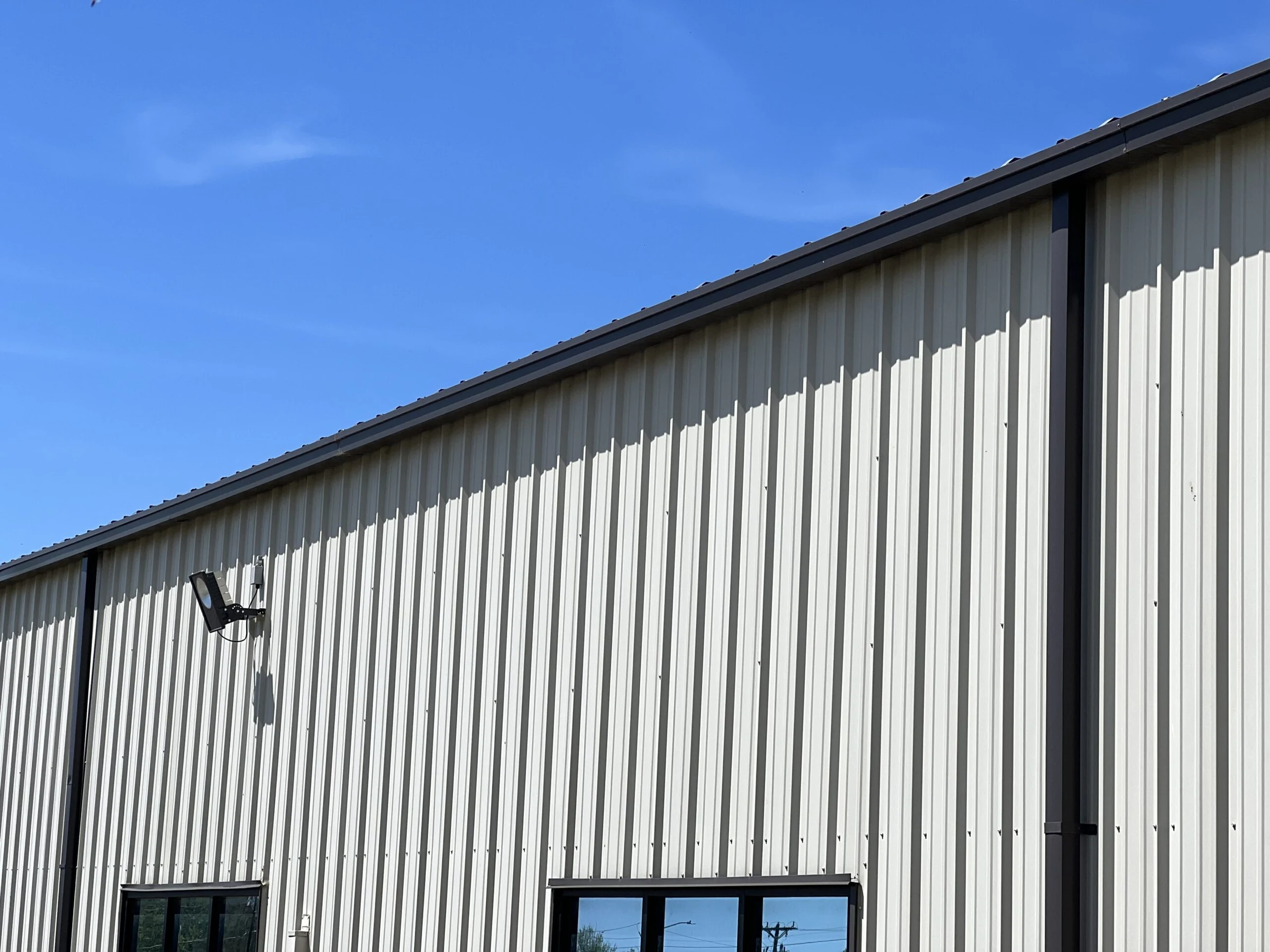
R-Panel Metal for the Plains Side of the Territory
Head east from Aurora past Watkins and Bennett, out toward Strasburg and Byers along I-70, and the buildings turn agricultural and utilitarian fast -- grain-related structures, highway service buildings, ranch and equipment storage, light industrial shops. Exposed-fastener R-panel is the metal roof most of them run, and the maintenance economics are different from anything we spec on a retail storefront.
Why R-Panel Is the Right Call for This Building Type
R-panel installs faster and costs meaningfully less per square foot than standing seam, because the panels fasten directly through the face rather than through a concealed clip system. On a large ag or storage building where the roof isn't part of the customer experience, that lower installed cost usually wins the budget conversation outright.
It's a straightforward system to repair too, since individual panels can be replaced without disturbing the whole field the way some interlocking systems require. That matters on a building with a long service life and an owner who plans to maintain it incrementally rather than replace the whole roof at once.
Strasburg and Byers see a good share of this construction on grain-handling and highway-service buildings, where the owner is usually working off a tight construction budget and needs the roof up fast between growing seasons. R-panel's simpler installation fits that timeline better than a system with more detailed seaming work.
Exposed Fasteners: The Maintenance Line Item Standing Seam Doesn't Have
Every screw penetration through an R-panel is a potential leak point once the neoprene washer underneath ages and hardens. Thermal expansion and contraction across a full day-night cycle on the plains works those fasteners loose gradually, and re-driving or replacing backed-out screws is the single most common maintenance call we get on an R-panel roof.
- Fastener backout from repeated thermal cycling
- Washer degradation and seal failure at screw penetrations
- Panel lap seam sealant aging and cracking
- Ridge cap and eave trim fastening
- Rust starting at scratched or damaged panel coating
We budget a periodic fastener check into any maintenance program on these roofs, because catching backed-out screws before they leak costs a fraction of what a water-damaged interior repair runs afterward.
Lap seam sealant is the other component that ages faster than most owners expect. The sealant bedded between overlapping panel edges dries and cracks well before the steel itself shows any wear, and a cracked lap seam lets wind-driven rain track sideways under the panel rather than shedding off the surface.
Hail Impact on Exposed-Fastener Panels
R-panel takes hail impact on a wider exposed panel face than standing seam's narrower pans between seams, and dents show more readily on the lighter gauges commonly used for ag and storage buildings. On buildings where appearance genuinely doesn't matter, that cosmetic dent is not worth chasing; the bigger concern after a hail event is checking whether any panel took a hit hard enough to compromise the coating and start rust.
We walk these roofs after significant hail events the same as any other, checking fastener integrity along with panel condition, since a storm event that loosens screws is often more consequential than the dents that get photographed. On a building with a long open span, we also check purlin alignment after a severe event, since a hard enough impact combined with existing structural stress can shift how a panel seats against its supports.
R-Panel vs Standing Seam: The Honest Cost Comparison
R-panel wins on installed cost, plain and simple. Standing seam wins on long-term maintenance, since there are no exposed fasteners to service over the roof's life. For a working ag building, a highway service structure, or a storage barn with a long ownership horizon and a tight construction budget, R-panel's lower upfront cost usually outweighs the maintenance trade-off, especially with a periodic fastener check built into the plan.
For a building where the roof is visible to customers or the owner wants to minimize maintenance calls over decades, standing seam's higher install cost pays for itself in avoided service trips. We price both options honestly rather than defaulting to whichever is easier to install. See our standing seam page for that comparison in more detail.
Distance factors into that decision too, more than owners usually expect. A ranch building out past Byers is a longer service trip than a warehouse near Watkins, and a system that needs fewer return visits over its life carries real value on a property that isn't checked on daily.
Questions About R-Panel on Ag and Industrial Buildings
How often do R-panel fasteners need to be checked?
We recommend an annual check on working ag and industrial buildings, more often on roofs with a documented history of backout or leaks.
Can you replace individual damaged panels without redoing the whole roof?
Yes, that's one of R-panel's advantages. Damaged sections can be swapped out without disturbing the rest of the field.
Does R-panel handle Colorado's freeze-thaw cycling well?
Reasonably well structurally, though the fasteners and washers are the components most affected by repeated thermal movement, not the panel material itself.
Is R-panel a good fit for a building with a metal building system frame?
It's the standard pairing for pre-engineered metal buildings out on the plains side of our territory, since it matches the purlin spacing those systems typically use.
What's the biggest mistake owners make maintaining an R-panel roof?
Ignoring fastener condition until a leak actually appears. A five-minute screw check during a routine site visit catches most problems long before they cost real money to fix.