Commercial Roofers in Dupont
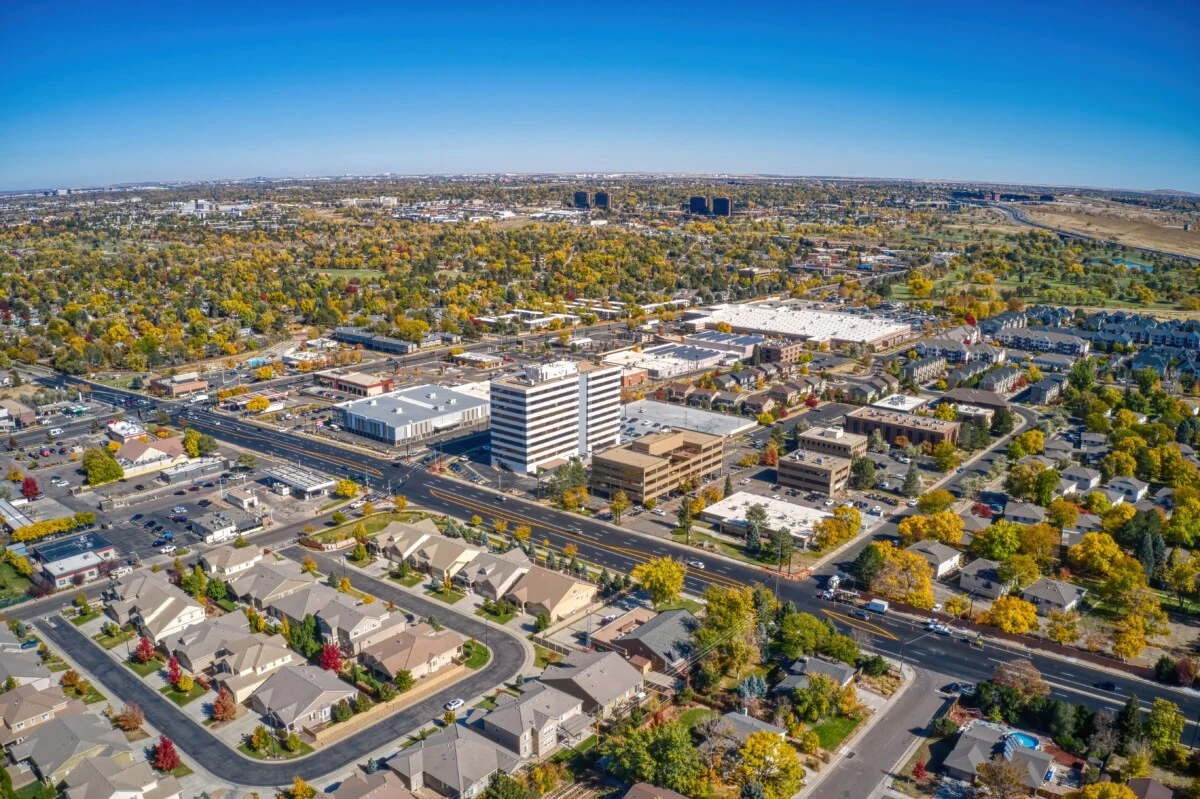
Commercial roofers serving Dupont should document leak sources, wet insulation, drainage, edge details, penetrations, and repair history before recommending a scope. Dupont sits in unincorporated Adams County, wedged between the Suncor refinery complex and the Rocky Mountain Arsenal National Wildlife Refuge, a stretch where warehouses, tank-farm support buildings, and rail-served industrial shells sit close enough to the refinery that airborne exposure becomes a roofing variable instead of an afterthought. We work on the low-slope membrane roofs that dominate this corridor.
What's Actually on These Roofs
Most of the commercial roof area out here is low-slope: single-ply membrane on metal deck, older built-up systems on legacy structures from before the corridor filled in, and a scattering of standing seam metal on newer pre-engineered buildings. Bulk storage buildings, rail-adjacent warehouses, and light-manufacturing shells make up most of the roof inventory we see between the arsenal boundary and the refinery fence line.
Deck condition varies more than you'd expect for a corridor this industrial. Some buildings went up in the last decade with insulated metal panel roofs; others are running original 1970s-era gravel-surfaced built-up roofing that's been recoated more than once. We treat every Dupont roof as its own case, not a template, because the deck age and the exposure history both drive the number that matters: remaining service life.
Refinery Exposure Changes the Membrane Math
Proximity to active refining and tank-farm operations means airborne particulate, hydrocarbon vapor, and sulfur compounds land on these roofs at a higher rate than roofs ten miles west in downtown Denver. Standard TPO can handle general UV and weather exposure fine, but sustained hydrocarbon contact can affect seam integrity and plasticizer retention over time on lower-grade membranes.
For buildings closest to the tank farms, we often price out PVC or KEE-based membranes alongside standard TPO. The material cost per square foot runs higher, but the chemical resistance changes the replacement cycle enough that the lifecycle cost per square foot often favors the upgrade once you factor in one fewer tear-off over a twenty-year hold. Coatings need the same scrutiny, a standard acrylic recoat won't hold up the same way a solvent- or silicone-based chemical-resistant coating will where vapor exposure is heaviest.
Wind, Hail, and Open-Plains Exposure
There's very little windbreak between the arsenal refuge land and the refinery, which means these roofs take wind loading straight off the plains with nothing to slow it down. Denver-metro hail alley runs right through this stretch of Adams County too, so we spec enhanced fastening patterns at perimeters and corners on new installs and check those zones first on every inspection.
Ponding is the other recurring issue on the flatter industrial roofs in Dupont. A lot of these buildings were built to older slope minimums, and thirty or forty years of minor deck settlement creates low spots that hold water after storms. We map ponding areas during inspection and price tapered insulation or targeted drain additions separately from a full recover, since the fix doesn't always require touching the whole field.
- Active leaks at pipe penetrations, curbs, and stack tie-ins
- Standing water on the low-slope field more than 48 hours after a storm
- Membrane seam separation or granule loss near tank-farm-facing elevations
- Fastener backout or loose flashing after high-wind events
- Coating chalking or discoloration from combined UV and vapor exposure
- Undersized drains overwhelmed during heavy summer downpours
Permitting Through Unincorporated Adams County
Dupont isn't an incorporated city, so re-roofing and recover permits route through Adams County's building department rather than a municipal office. That changes inspection scheduling and, on occasion, the documentation required for buildings inside industrial overlay zoning near the refinery. We handle that submittal process directly so the facility manager isn't the one chasing county sign-off mid-project.
Scheduling around an operating industrial site is its own constraint. Most of these buildings don't shut down for a roof project, so we sequence work in sections, keep access to loading docks and rail spurs clear, and coordinate daily start times with whatever shift pattern the facility is running.
Recover vs. Tear-Off: The Budget Decision
On an industrial building this size, the recover-versus-tear-off call is a lifecycle cost per square foot decision more than anything else. A recover skips tear-off labor and disposal tonnage, which lowers upfront cost per square foot, but it only works if the existing deck is dry and the structure can carry the added dead load of a second membrane layer.
Tear-off costs more per square foot up front because you're paying for demolition, disposal, and new insulation, but it resets the clock and lets us correct drainage and R-value at the same time. We run both numbers side by side for Dupont facility managers before recommending either path, because the cheaper option this year isn't always the cheaper option over a fifteen-year hold.
Questions From Dupont Facility Managers
Does refinery-adjacent air actually shorten membrane life out here?
It can, depending on the membrane and how close the building sits to active tank-farm operations. Standard TPO handles typical exposure fine at moderate distances; buildings closest to the fence line often do better on PVC or a chemical-resistant coating system.
Is PVC worth the extra cost over TPO for a Dupont warehouse?
It depends on proximity to the refinery and how long you plan to hold the building. We price both and show the lifecycle cost per square foot difference so the decision is a numbers call, not a guess.
Can a re-roof happen without shutting down an active warehouse?
Yes, on most low-slope roofs we sequence the work in phases and keep dock doors and rail access clear throughout, coordinating around your operating hours.
What permit process applies since Dupont isn't incorporated?
Permits route through Adams County's building department rather than a city office. We manage that submittal and inspection scheduling directly.
How often should a refinery-adjacent roof get inspected?
We recommend twice-yearly inspections for buildings closest to tank-farm operations, plus a walk-through after any significant hail or high-wind event given how exposed this corridor is.