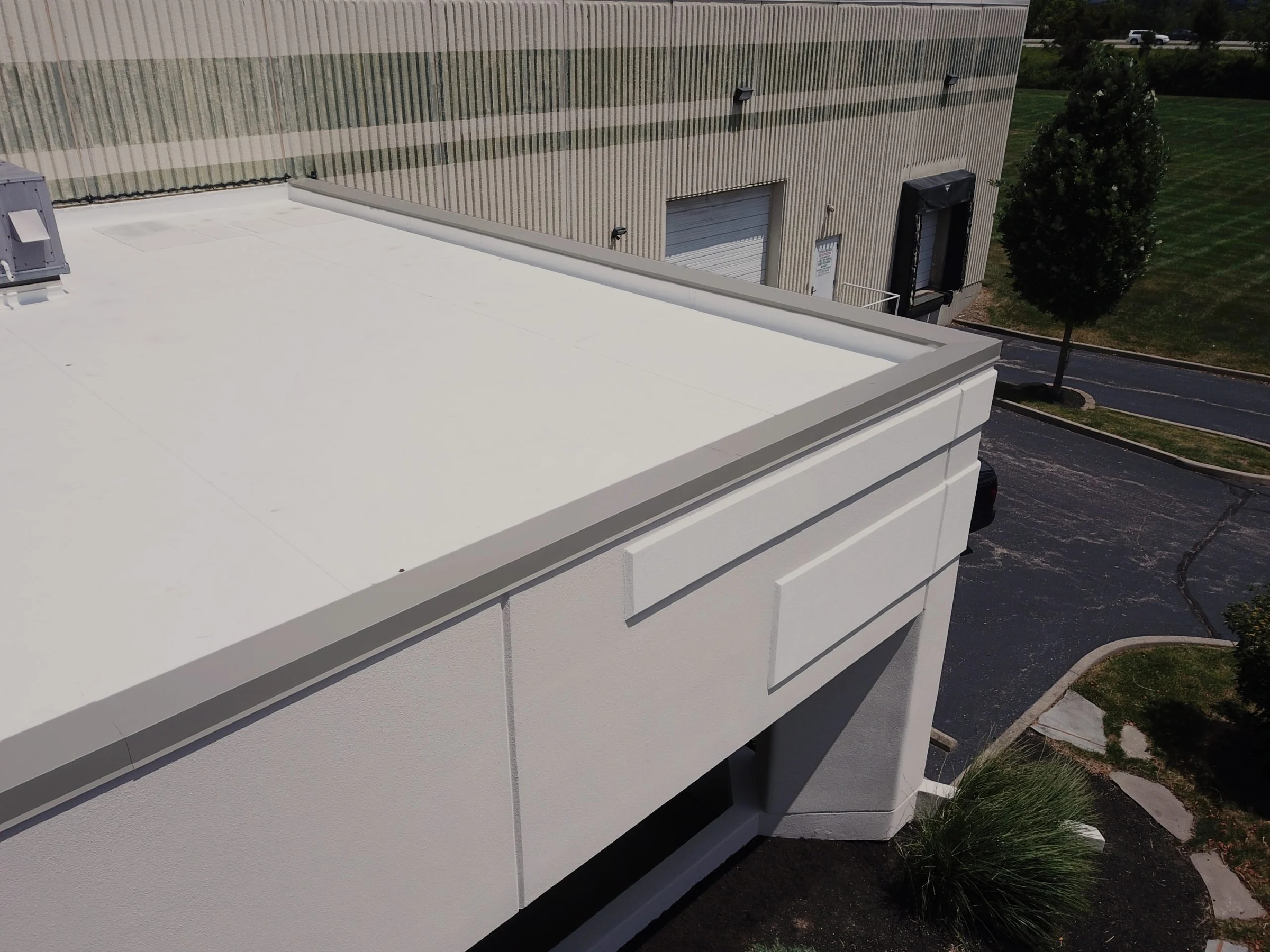
Edge Metal and Coping Repair Where Aurora's Wind Loads Hit Hardest
The edge of a roof takes wind load the field membrane rarely sees, and it's usually the first place a storm finds a weakness. Edge metal, coping, and gutter work on an Aurora commercial building has to account for wind coming off the Front Range as much as it accounts for the roof's overall drainage.
Why Edge Details Fail Before the Field Membrane Does
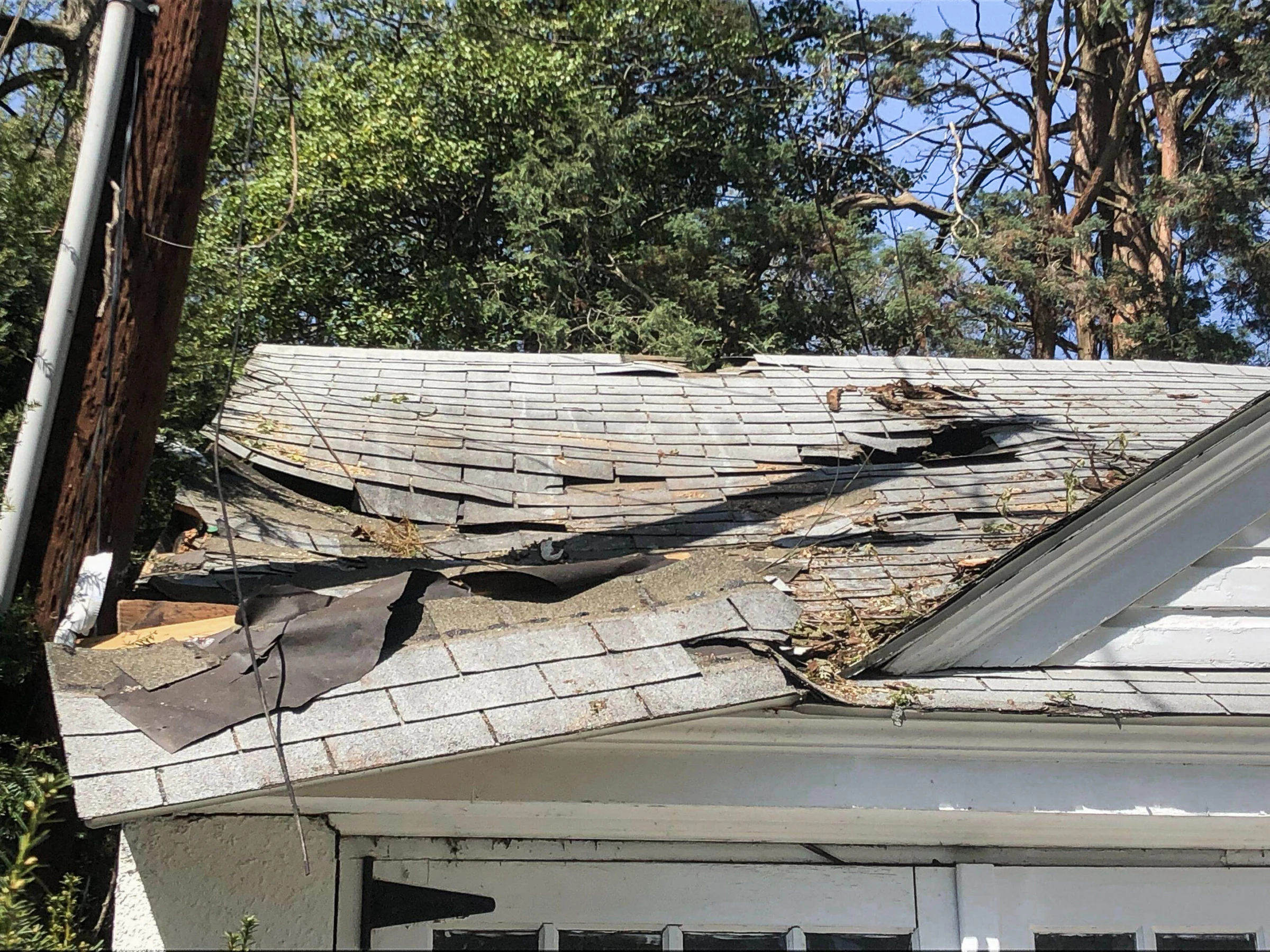
Wind uplift concentrates at corners and edges far more than across the open field, which is basic roofing physics but gets underestimated on a lot of older buildings where edge metal was installed to a lower wind standard than current code requires. A loosened edge cleat or a coping joint that's opened even slightly gives wind a place to grab and start peeling.
We see this pattern often on buildings that have taken repeated hail and wind events over the years: the field membrane is intact and performing fine, but the edge metal has loosened incrementally with each storm until a seam finally opens enough to let water in behind it.
Coping and Parapet Wind Uplift in a High-Wind Corridor
Chinook winds that move down the eastern slope of the Rockies can produce sustained gusts well above what a lot of coping systems were originally engineered to handle, particularly on buildings constructed before current wind uplift standards were adopted. We check coping cap attachment and joint sealant condition as a distinct inspection item, separate from the general roof walk.
A parapet wall with damaged or missing coping doesn't just risk the coping itself; it exposes the top of the wall assembly to water intrusion that can travel down into the wall cavity and cause damage well beyond the roofline, which is often more expensive to fix than the coping repair would have been.
Gutter and Downspout Sizing for Sudden Summer Downpours
Front Range convective storms can drop a significant volume of rain in a short burst, and a gutter system sized for average rainfall rather than peak-intensity events backs up fast during those storms. We evaluate gutter and downspout capacity against the roof's actual drainage area, rather than only against what's currently installed.
Undersized or clogged gutters on older buildings, particularly around Original Aurora's older commercial stock, are a common source of water intrusion at the fascia and wall line that gets misdiagnosed as a roof membrane leak when the real cause is overflow at the edge.
- Coping cap attachment and seam inspection for wind uplift risk
- Edge metal cleat and fastening pattern check against current wind standards
- Gutter and downspout capacity review against actual drainage area
- Parapet wall flashing inspection where coping meets the vertical surface
- Sealant joint condition check at all coping and edge transitions
- Repair or full replacement recommendation based on findings
Detailing Around Rooftop Equipment and Penetrations
Edge and perimeter work often extends to curb flashing around rooftop units positioned near the roof's edge, since equipment placed close to a parapet wall complicates both wind exposure and drainage flow along that section. We treat these transition points as part of the edge scope rather than a separate line item.
Any penetration near the roof perimeter gets checked alongside the edge metal work, since a compromised edge detail and a nearby failing penetration often share the same underlying cause: wind-driven water finding the weakest point along that section of the roof.
Antenna mounts, satellite dishes, and other perimeter-adjacent equipment common on office and institutional roofs near Greenwood Village and the Denver Tech Center add another set of fasteners and penetrations close to the edge line, and we make sure those attachment points get checked as part of the same visit rather than assumed to be someone else's scope.
Replacing vs Re-Securing Existing Edge Metal
Not every edge metal issue needs full replacement. Where the metal itself is in good condition and the failure is limited to loosened fasteners or a failed sealant joint, re-securing and resealing can restore performance at a fraction of replacement cost.
Where the metal has corroded, warped, or been damaged across multiple sections, we recommend replacement rather than a series of repeat repairs, since a compromised edge system tends to fail again at a different point shortly after a partial fix.
Edge Metal and Coping Questions
How do I know if my building's edge metal needs attention?
Loosened coping caps, visible gaps at seams, or water staining on the parapet wall below the coping line are the clearest signs. We can also spot early-stage loosening during a routine inspection before it becomes visible from the ground.
Can wind damage edge metal without an obvious storm event?
Yes. Sustained high wind, even without an official severe weather warning, can gradually loosen fasteners and open seams over time, which is part of why we check edge details separately during routine inspections rather than only after named storms.
Are gutters and downspouts part of a standard roof inspection?
Yes, drainage capacity and condition, including gutters where the building has them, are part of our standard inspection scope, not a separate add-on.
How long does edge metal repair typically take?
Most edge repair or resealing work on a standard commercial building can be completed in a day or two, depending on the extent of the affected perimeter and access conditions.
Does edge metal damage affect the roof's overall warranty?
It can, depending on the manufacturer and how the original system was specified. We check warranty documentation when relevant and make sure any repair work stays consistent with maintaining coverage where possible.