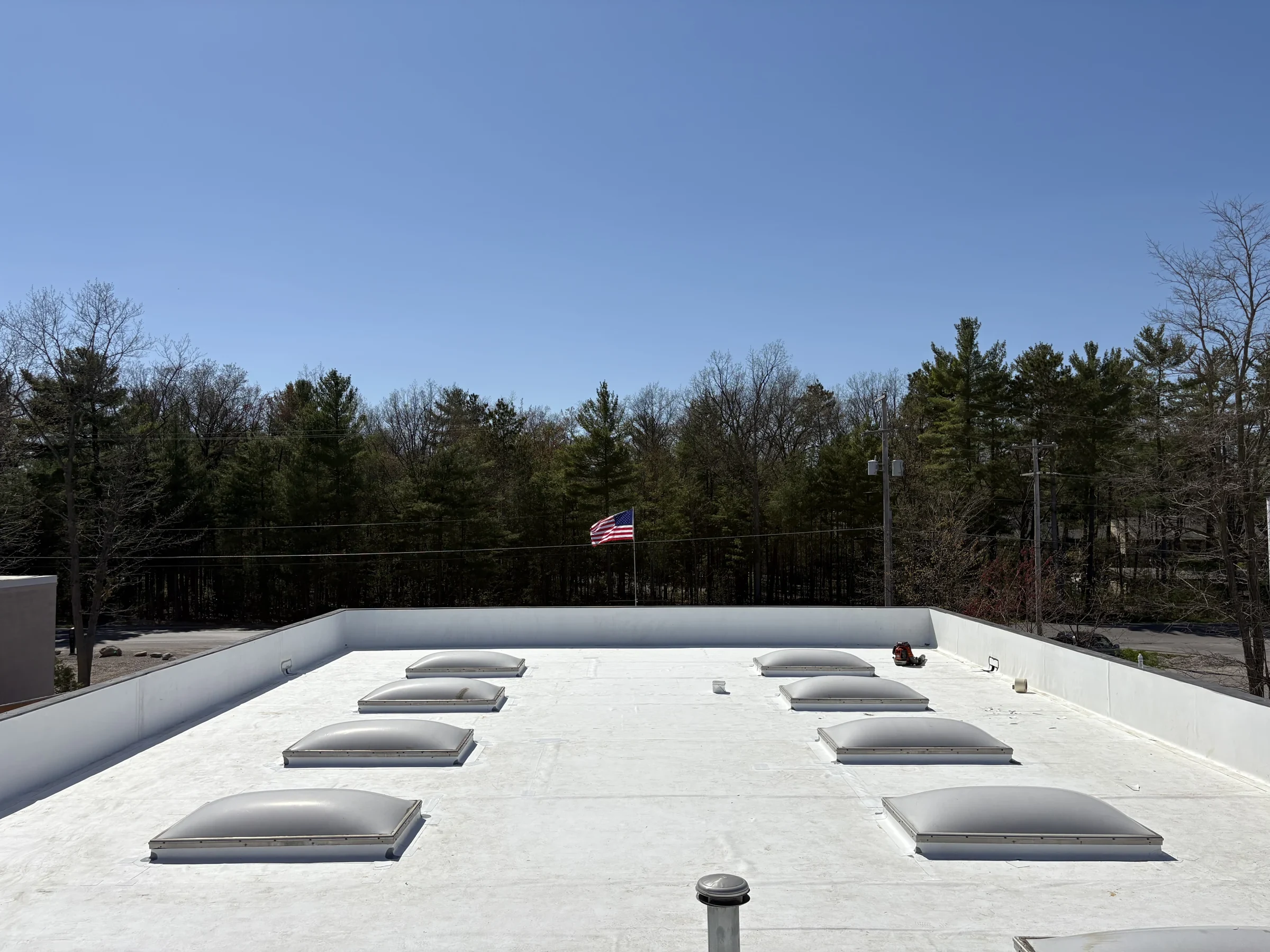
PVC for Roof Exhaust That Carries More Than Heat
Most flat roofs in this territory can run TPO or EPDM without a second thought. A smaller set of buildings -- lab space near Fitzsimons, facilities supporting operations near Buckley Space Force Base, kitchen exhaust on restaurant and hospitality roofs -- put chemical or grease exposure on the membrane that neither of those systems is built to shrug off. This page covers when PVC earns its higher price tag.
Chemical Exposure Is the Reason PVC Gets Specified Here
Lab buildings on the Anschutz Medical Campus vent exhaust from fume hoods and process equipment directly across the roof deck in some configurations, and that exhaust can carry solvents and other compounds that degrade a standard TPO or EPDM membrane faster than ordinary weathering would. PVC's chemistry resists that kind of exposure in a way single-ply alternatives generally don't.
Facilities supporting operations near Buckley carry a similar consideration, depending on what equipment and fueling activity happens nearby. We ask about exhaust sources, fuel storage, and any process venting on the roof before we ever recommend a membrane family, because the wrong answer there costs an owner a re-roof years ahead of schedule.
Restaurant and hospitality roofs across the retail centers at Southlands and Parker carry a more familiar version of the same problem. Grease-laden kitchen exhaust settles on a roof surface over years of daily service, and a membrane that isn't rated for that exposure softens and degrades around the exhaust fan curb well before the rest of the field shows any wear.
What PVC Actually Costs Against TPO and EPDM
PVC carries a real material premium over both alternatives, and we don't sugarcoat that in a proposal. The premium buys chemical resistance and, on most products, a heat-weldable seam similar to TPO's -- fast installation on large roof areas, plus a membrane that won't break down under the specific exposure a lab or kitchen exhaust puts on it.
- Lab and research buildings with fume hood or process exhaust
- Restaurant and food-service roofs with kitchen exhaust venting
- Facilities near fuel storage or heavy equipment operations
- Buildings with rooftop grease traps or exhaust fans
- Any roof where a prior membrane failed prematurely from exposure, not age
Where none of those conditions apply, we'll say so directly. Specifying PVC on a standard office or retail roof just adds cost without buying anything the building actually needs.
We'll also flag when a lighter-duty solution solves the same problem for less. A localized chemical-resistant flashing detail around a single exhaust point sometimes closes the gap without upgrading the entire field to PVC, and we'll price that alternative when it genuinely fits the exposure.
Welding PVC and Where the Details Take the Abuse
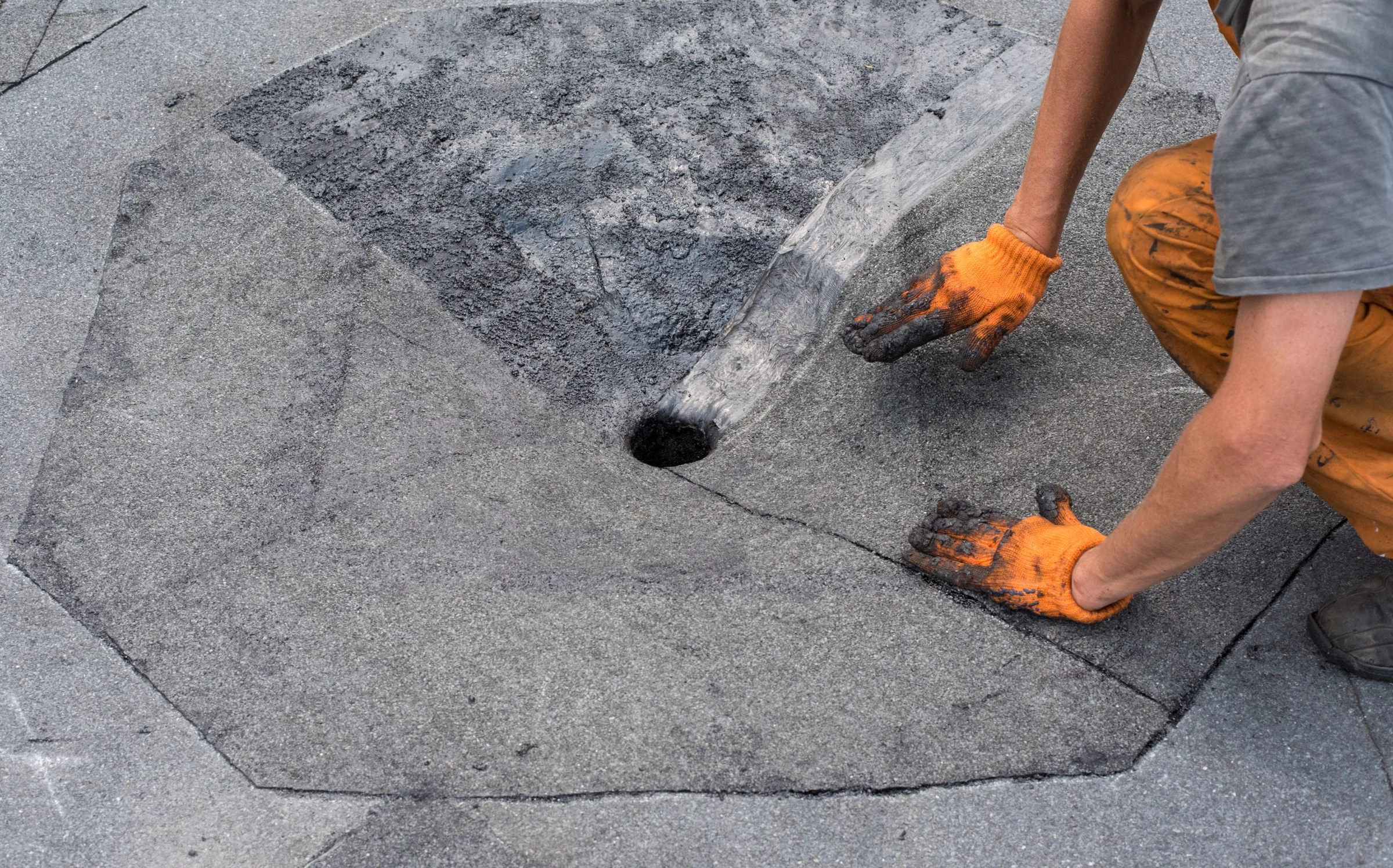
Like TPO, PVC seams get hot-air welded and then probed to confirm a full weld rather than a surface tack. The membrane field itself rarely fails first on a properly installed PVC roof -- penetrations, curb flashing, and roof-edge terminations are where exposure and weather find the weak points, the same as on any single-ply system.
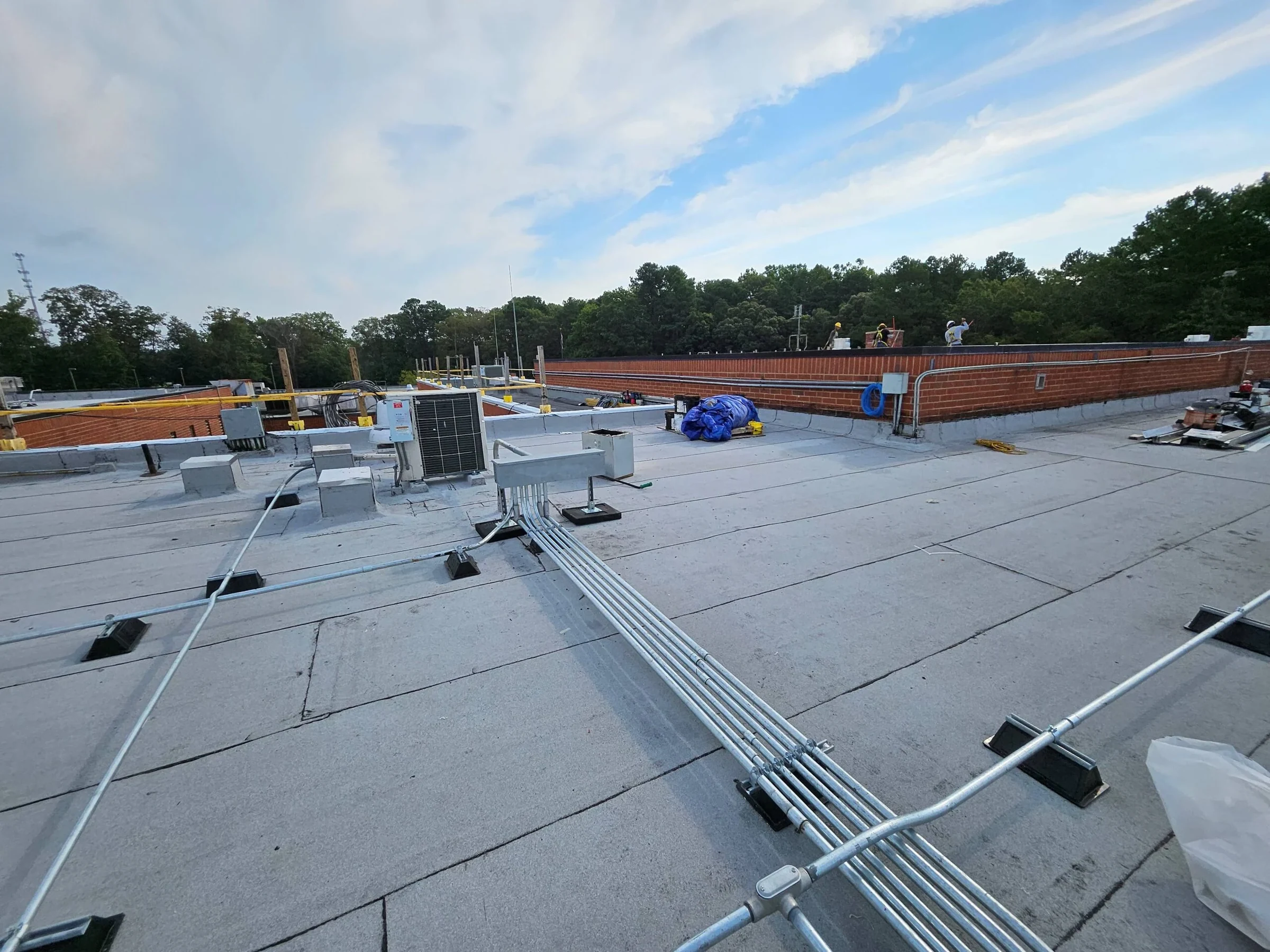
On lab buildings specifically, we pay close attention to exhaust stack penetrations and any equipment curb that sits directly downstream of a fume hood discharge point, since that's where chemical exposure concentrates rather than spreading evenly across the field.
Hail and Wind on a PVC Roof
PVC's impact resistance holds up reasonably well against hail, though reinforced sheet thickness still matters the same way it does with TPO. Wind uplift design follows the same logic too -- perimeter and corner fastening needs tighter spacing than the open field in this part of the Front Range, regardless of which single-ply membrane is on the roof.
We treat post-storm inspection on a PVC roof the same as we would on TPO: probe suspect seams, check every penetration and curb, and document findings before recommending any repair. See our storm damage repair page for that process in more detail.
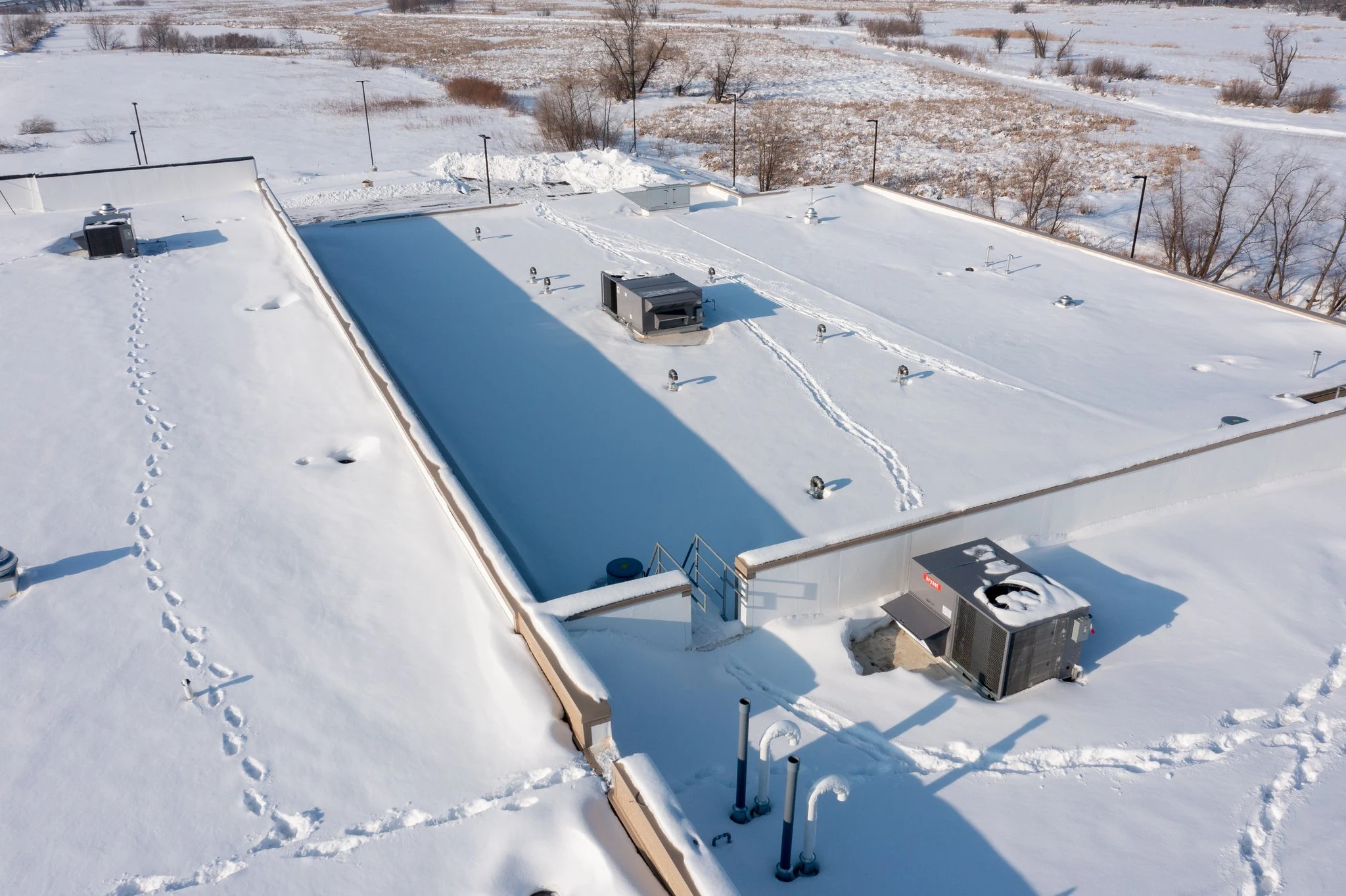
Snow load rarely changes the PVC spec itself, but drainage design does. A lab building with rooftop exhaust stacks needs drain and scupper placement coordinated around those obstructions, and we lay that out before installation rather than routing water around equipment as an afterthought.
Questions We Get About PVC
Is PVC always the right call for a building near a medical campus?
No. It's the right call when the roof deals with chemical or exhaust exposure. A standard office building on the same campus with no process venting can run TPO or EPDM without issue.
How much more does PVC cost than TPO?
It carries a meaningful material premium. We price that against the specific exposure risk on the roof rather than recommending it as a default upgrade.
Does PVC weld the same way TPO does?
Yes, most PVC products use hot-air welding for seams, and we probe every weld the same way we do on a TPO installation.
Can PVC go over an existing built-up roof?
Sometimes, depending on the condition of the existing roof and whether it passes a moisture scan. We evaluate that the same way we would for any recover decision.
Does PVC need different flashing details than TPO?
The general approach is similar, but PVC-compatible flashing and accessories need to match the membrane chemistry. We spec accessories from the same product family to keep every seam and detail compatible, since mismatched chemistry at a flashing joint is a common source of premature failure on an otherwise well-installed PVC roof.